Savannah – The Hostess City

Everyone said Savannah was great, but we needed to see it for ourselves. Now we can say from first-hand experience that Savannah is indeed one of America’s great cities, welcoming visitors like the hostess she is.  Our week in the area was filled with history, architecture, and natural beauty that surprised us at every turn.

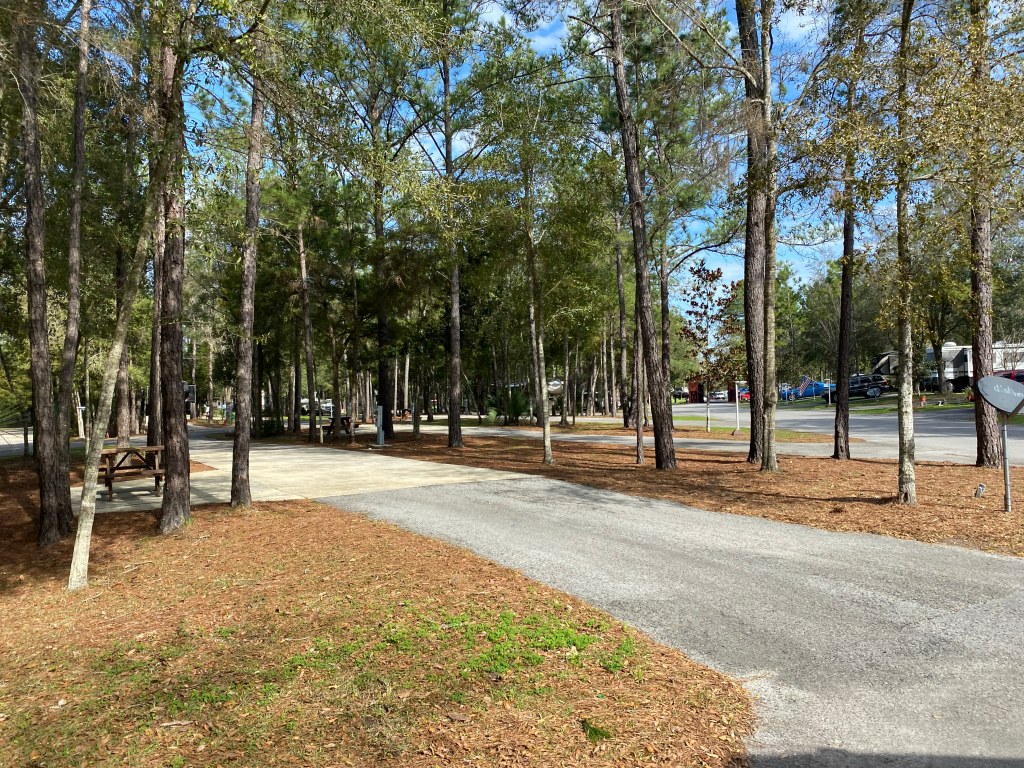
We based ourselves at the relatively new CreekFire Motor Ranch, which put us about 20 minutes from historic downtown Savannah. Creekfire is truly a resort with a heated pool, kids pool, lazy river, gym, lake, on-site bar and restaurant and more.
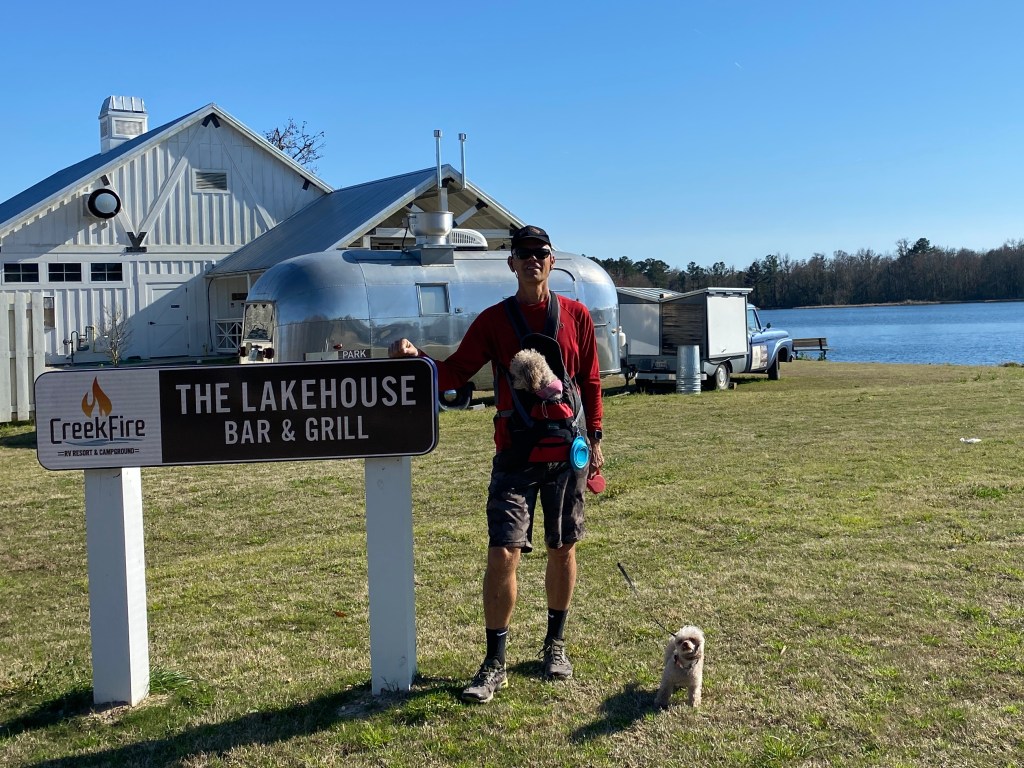
We even enjoyed a live band one night while sitting out by the lake. It was so nice that we’ve already booked a return visit next year!

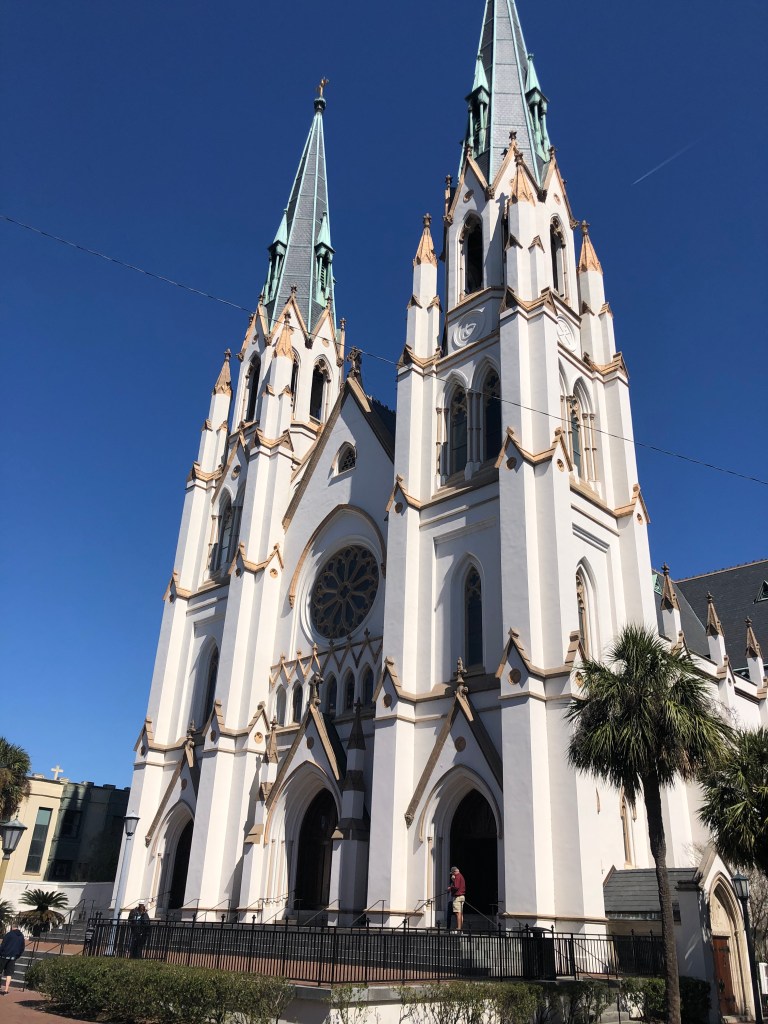
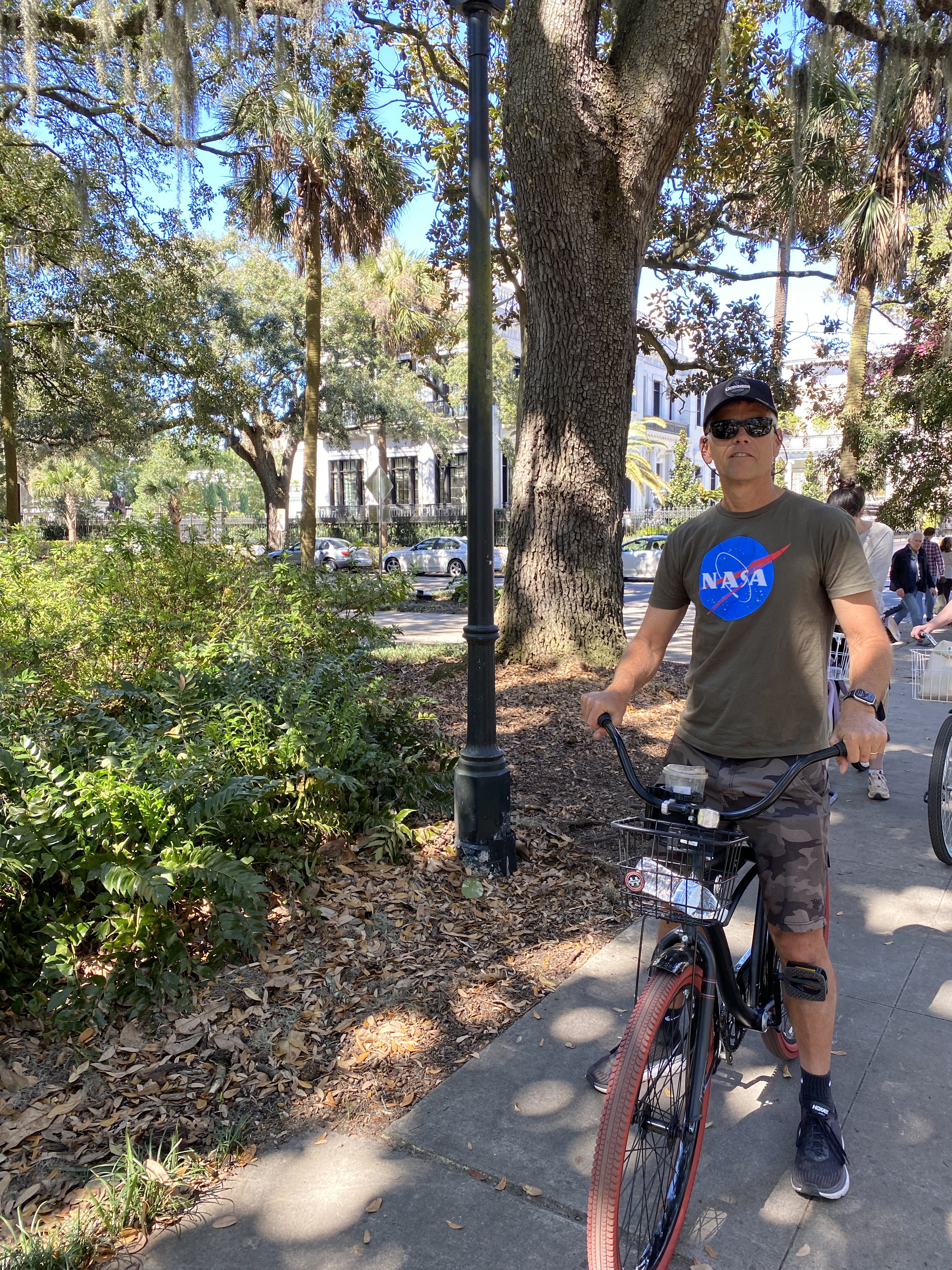
In Savannah, we decided to get oriented with a tour. This time we chose a bike tour, which took us from one side of the city to the other in about two hours. Our guide was well versed in the history of the city, its 22 squares, historic homes, and churches. Many of the places we visited were featured in the popular book, Midnight in the Garden of Good and Evil by Berendt, and my book club friends will likely recognize a few of these pictures.
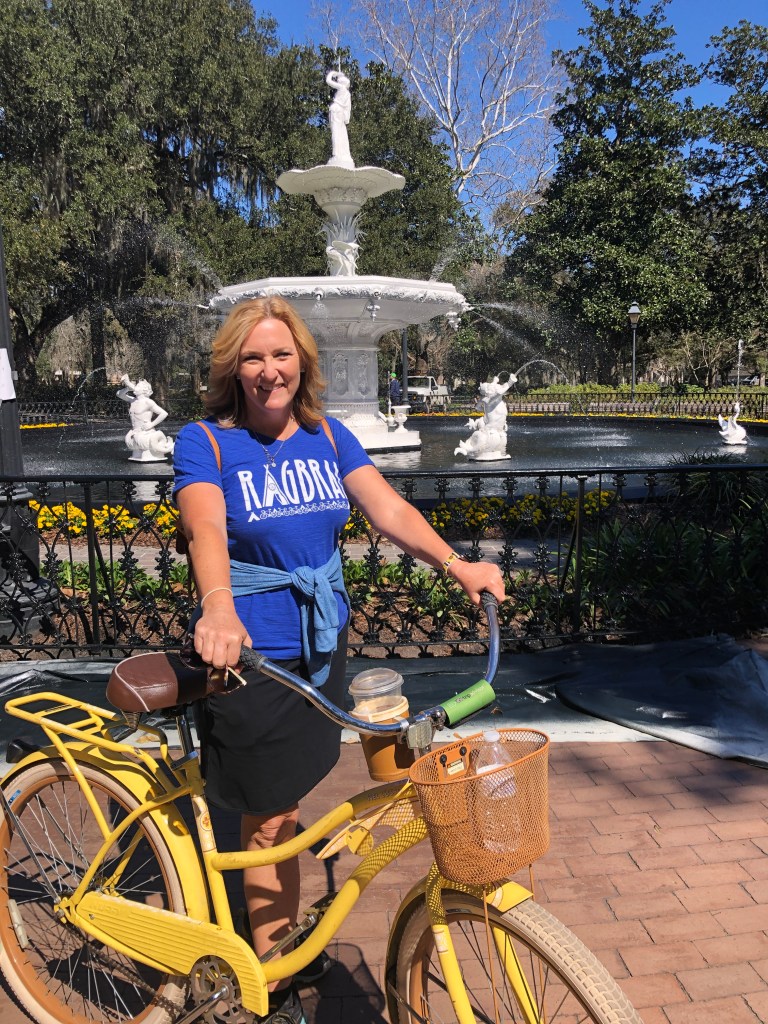
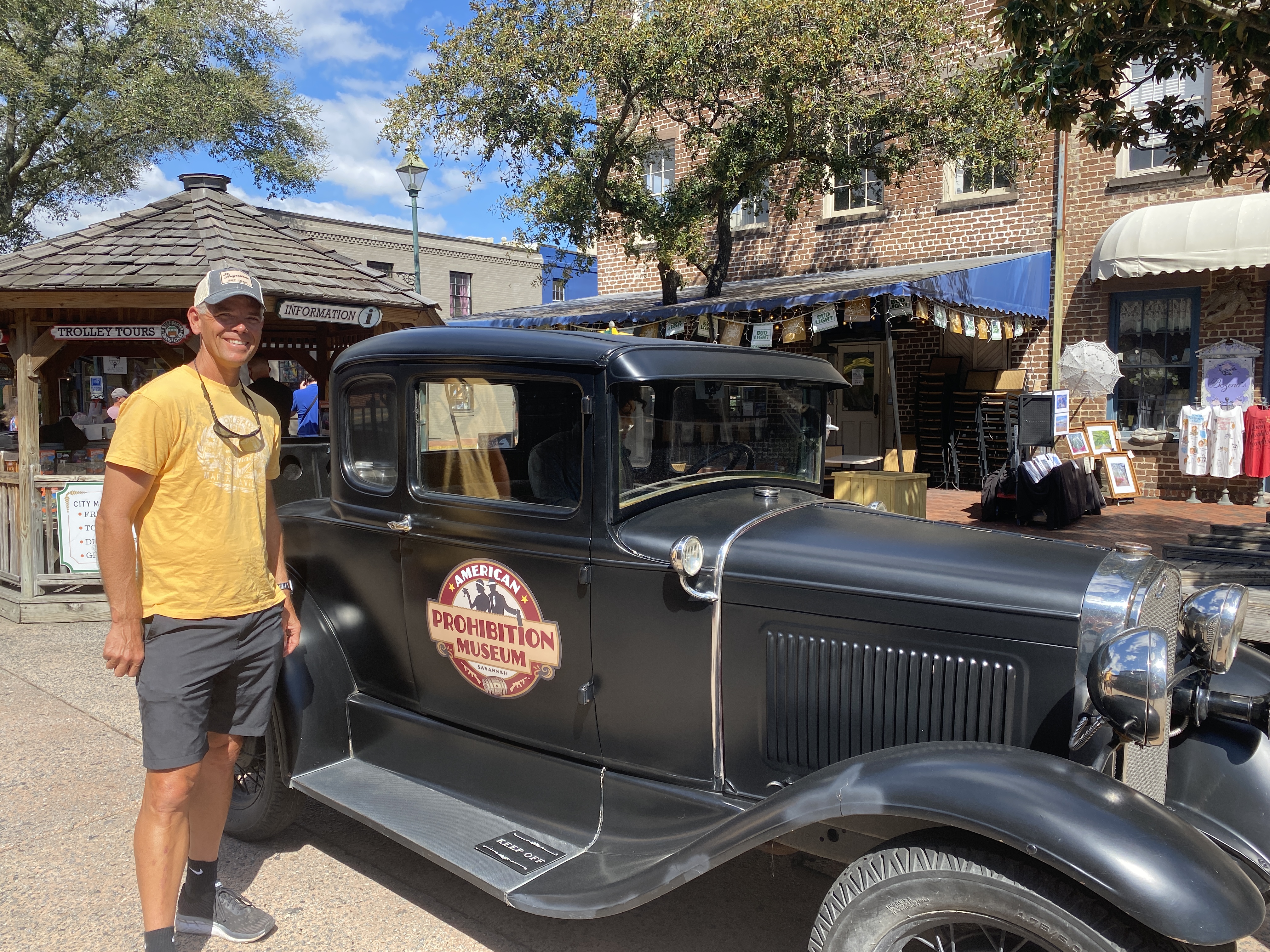
The bike tour gave us a good foundation for exploring the city on other days too. The American Prohibition Museum opened our eyes to the social, economic, and political impacts of restricting people’s choice to imbibe. Of course, Savannah was a mecca for moonshine and bootleggers. 

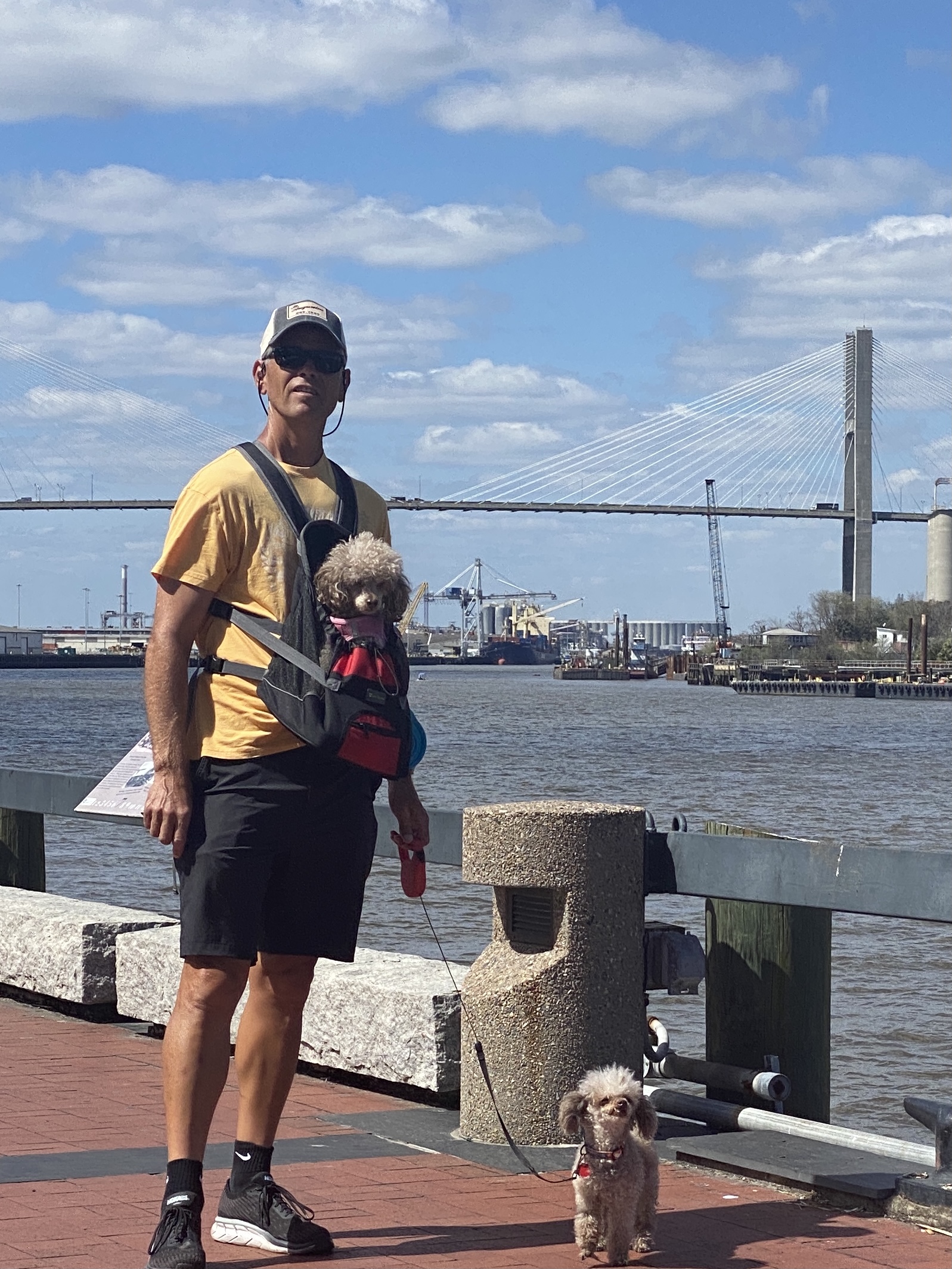
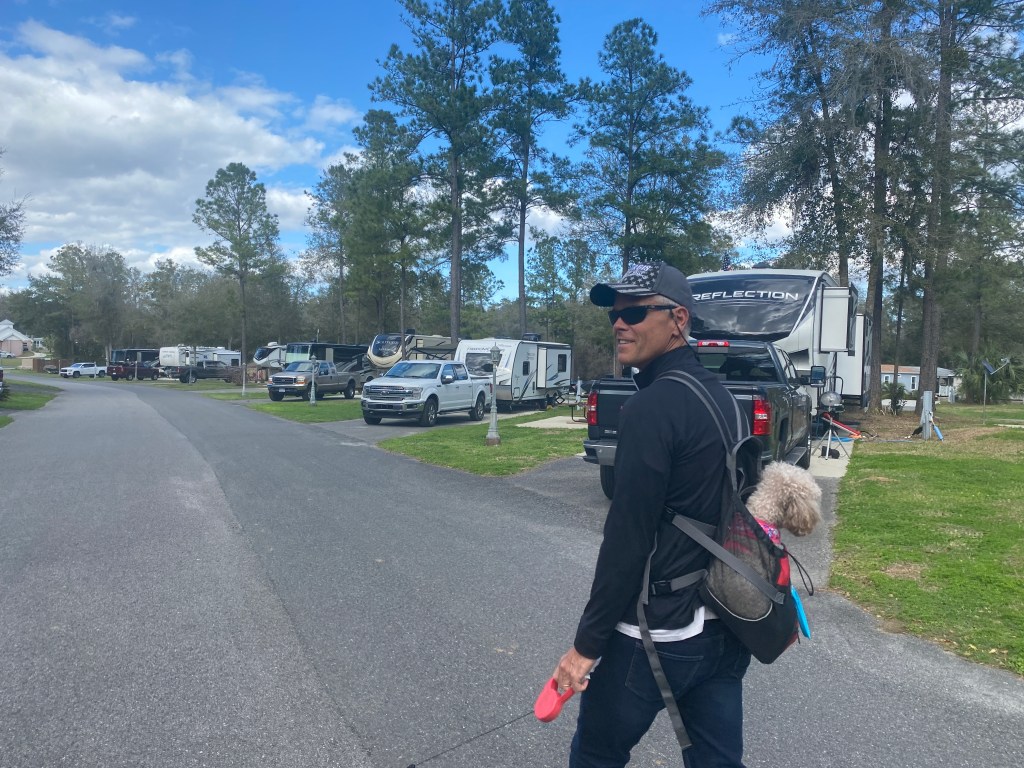
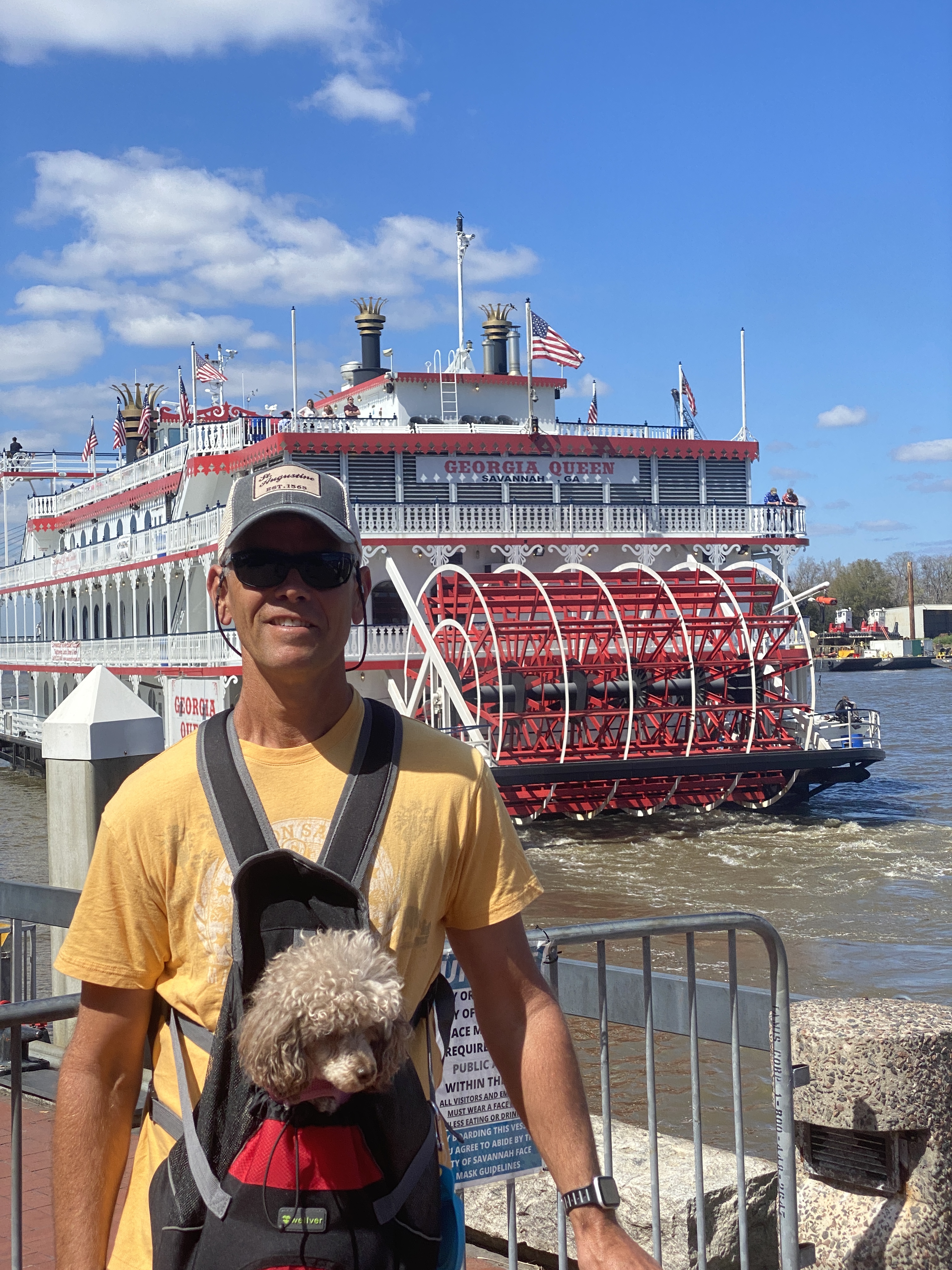
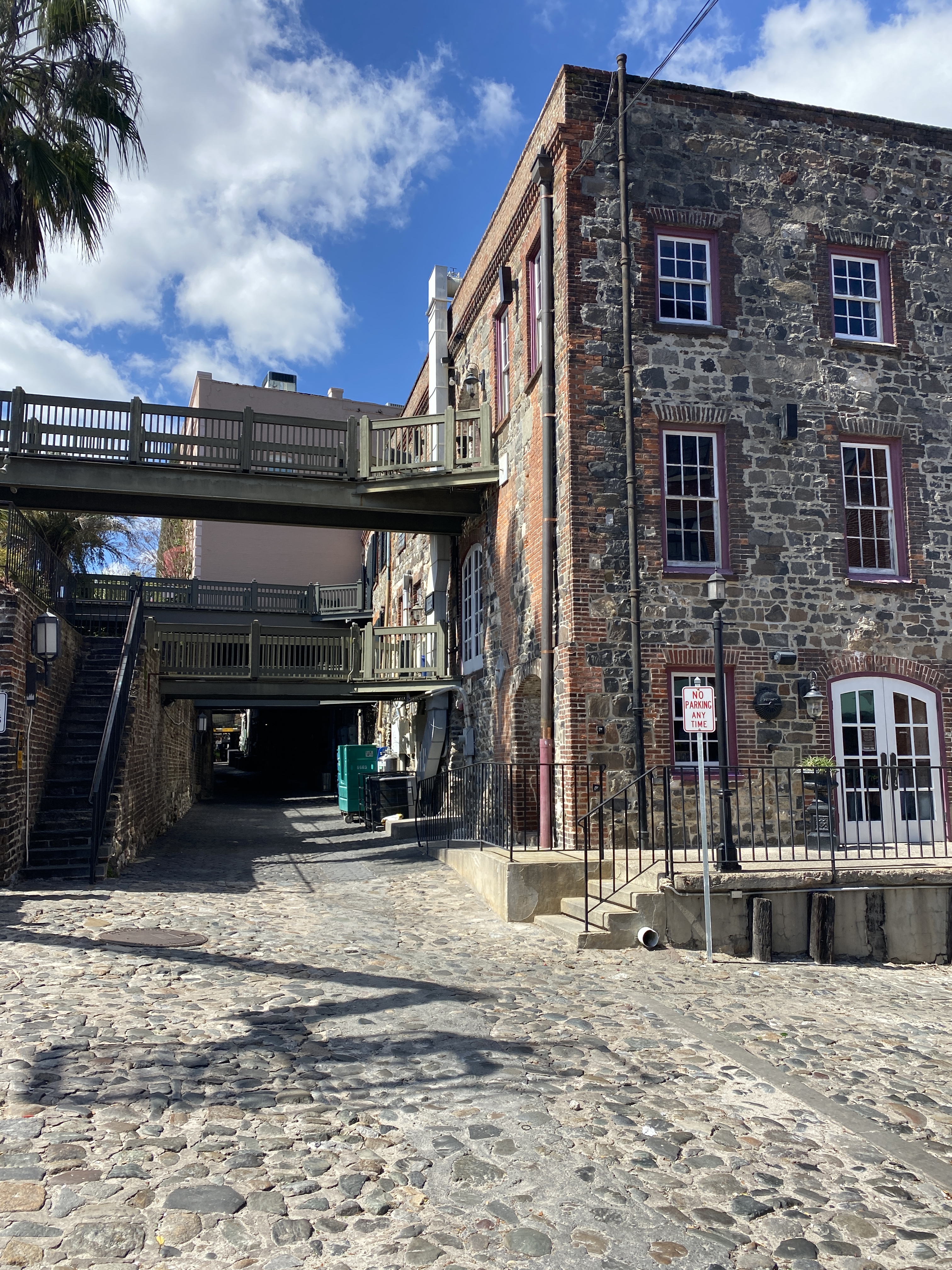
A stunning place to stroll is the Savannah Riverfront. Originally a bustling port for the cotton industry, now the old port buildings, roads, and ramps are now a focal point for shops, restaurants, and hotels. Even Bob and Mia enjoyed our riverfront walk.
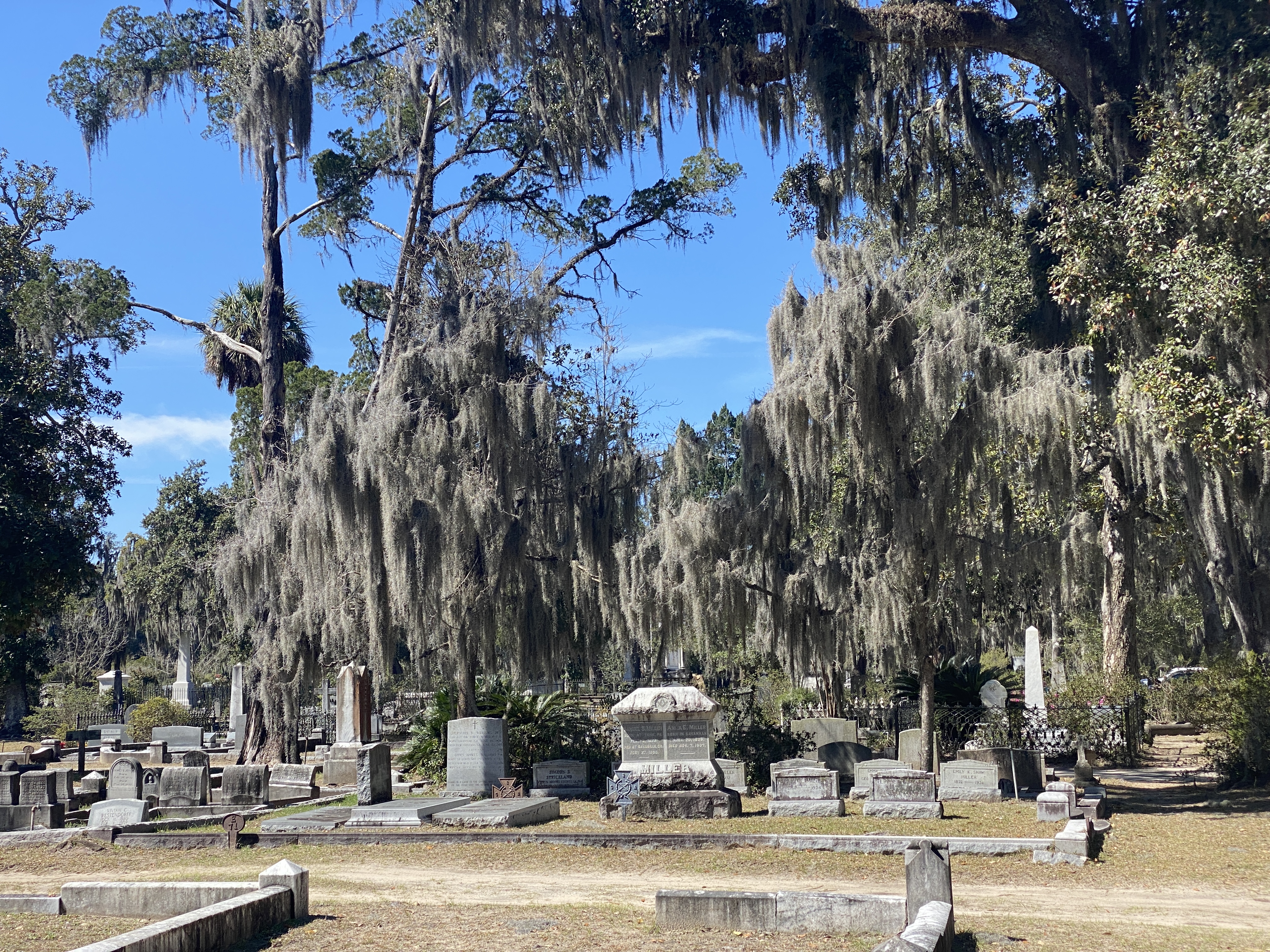
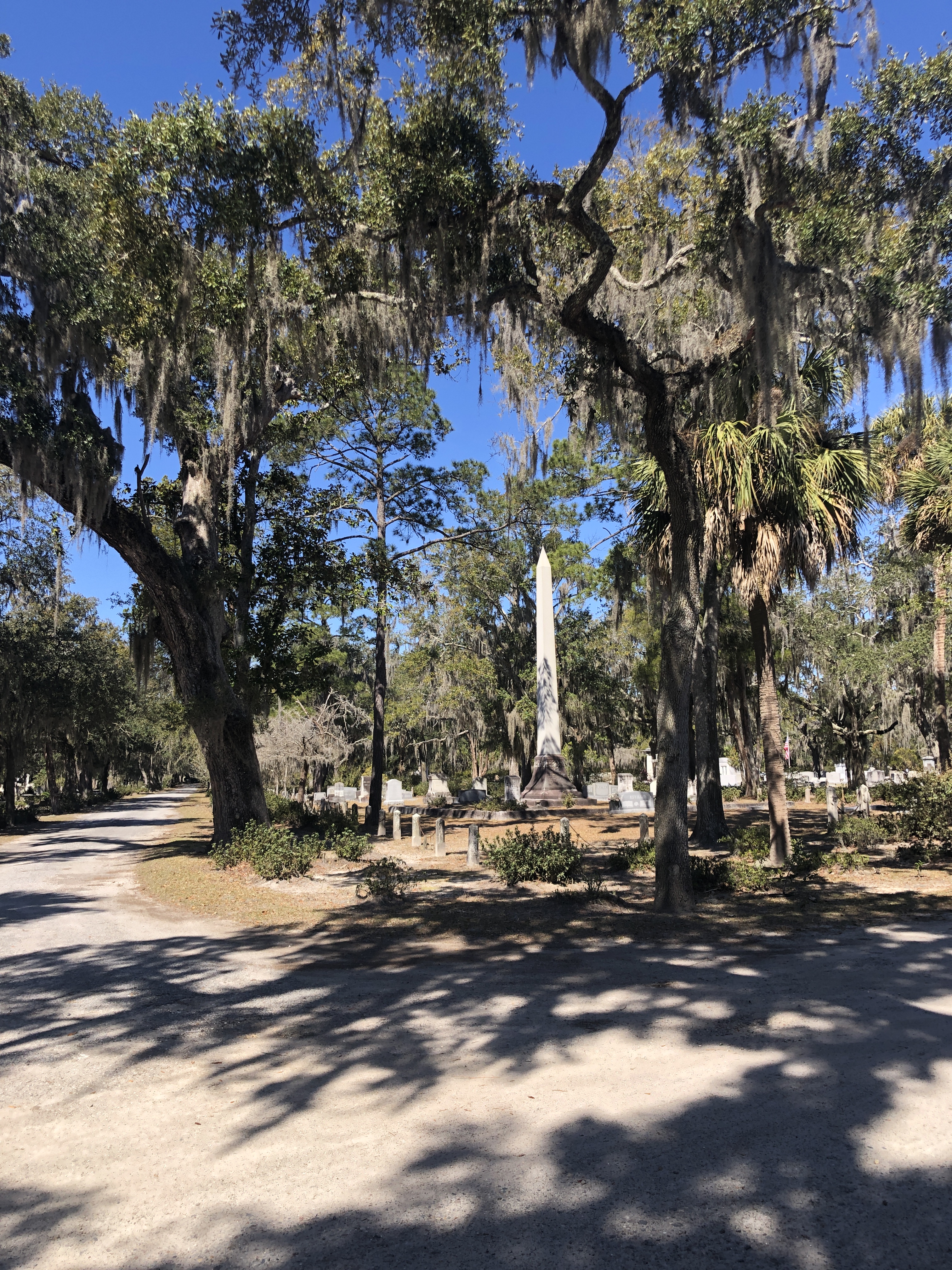
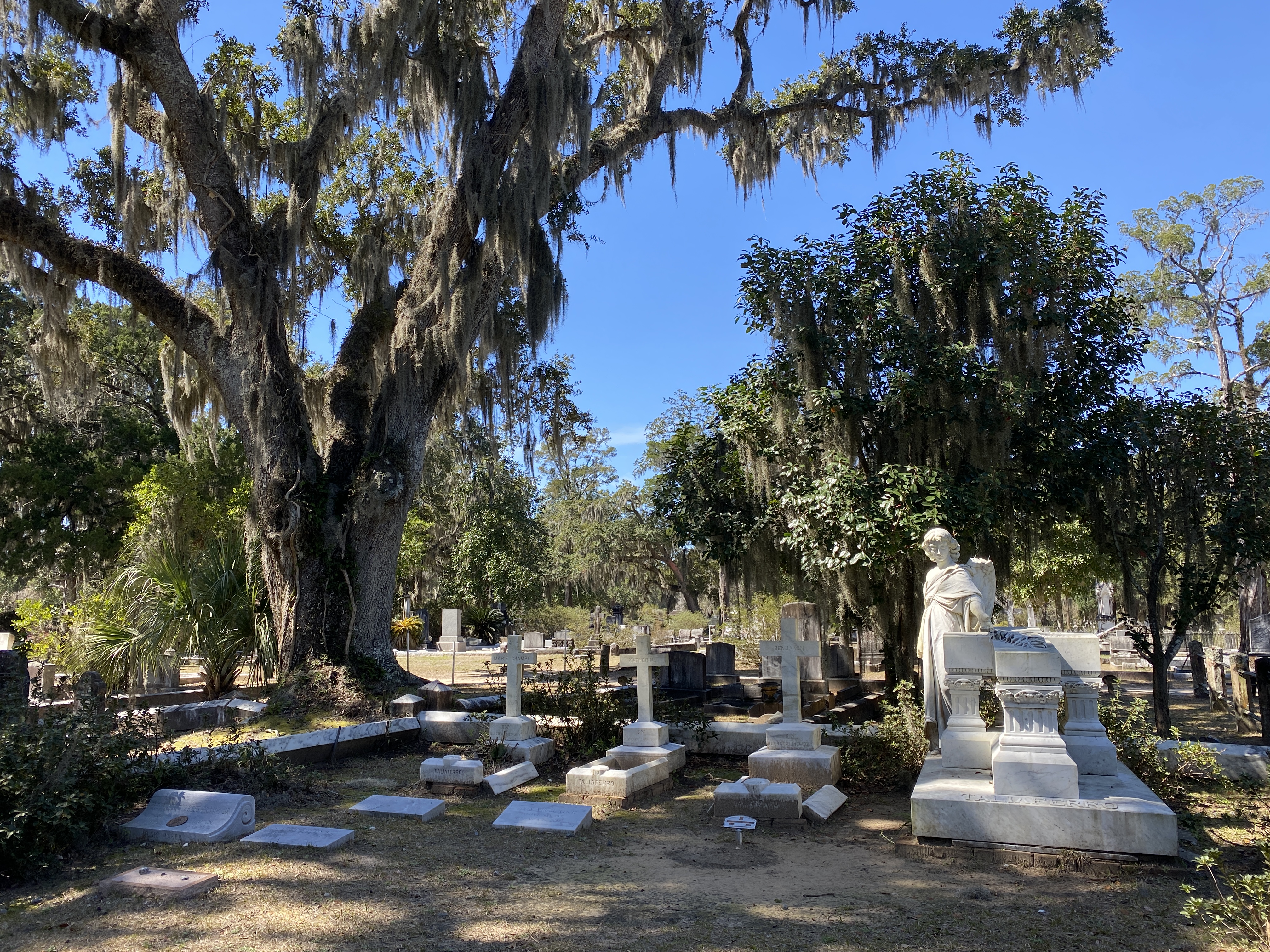
Another must-see stop in Savannah is the hauntingly beautiful Bonaventure Cemetery, where Savannah’s history is buried. We joined noted guide and historian Shannon Scott on a two hour exploration of the cemetery which was first established in 1846.

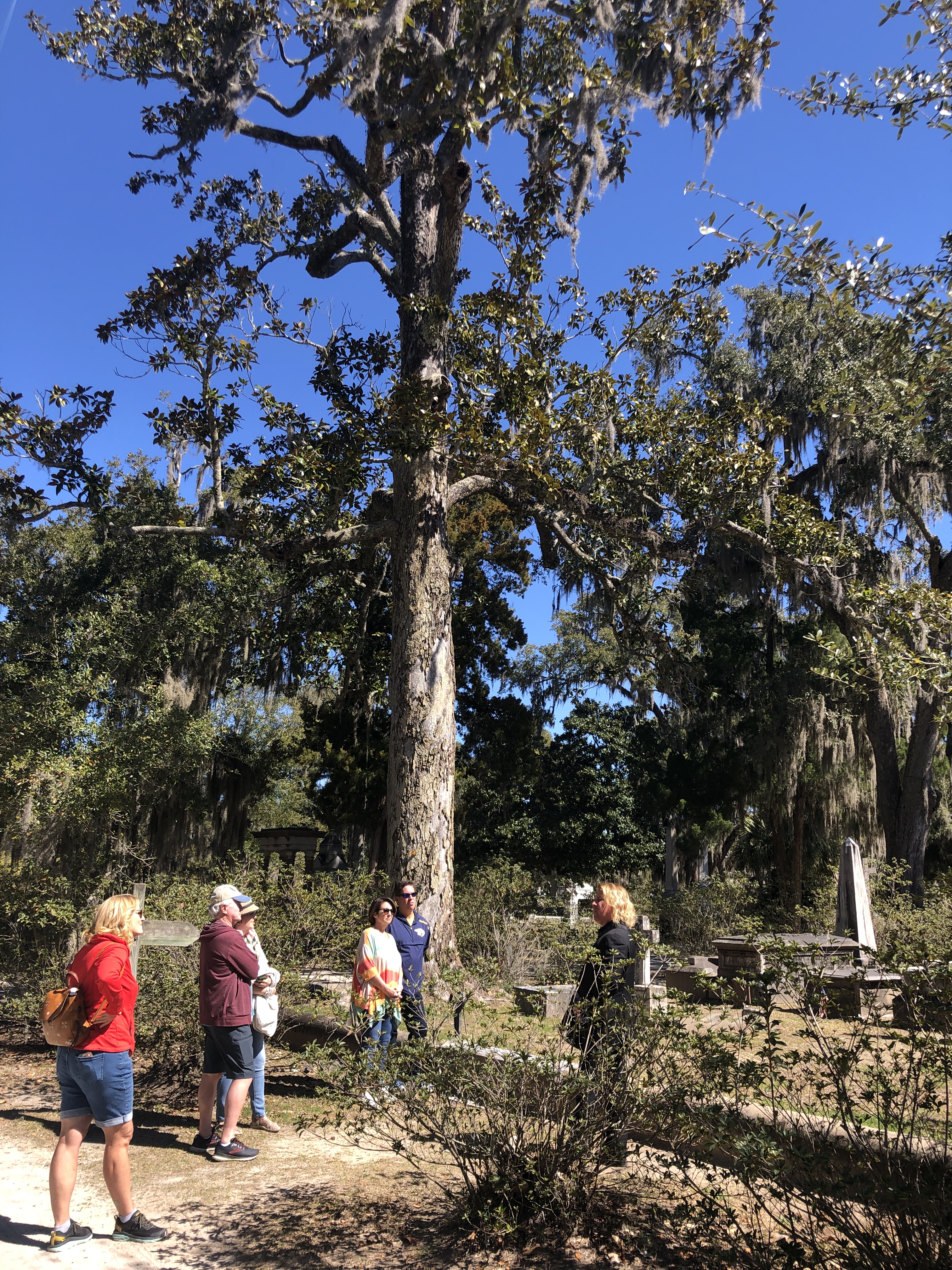
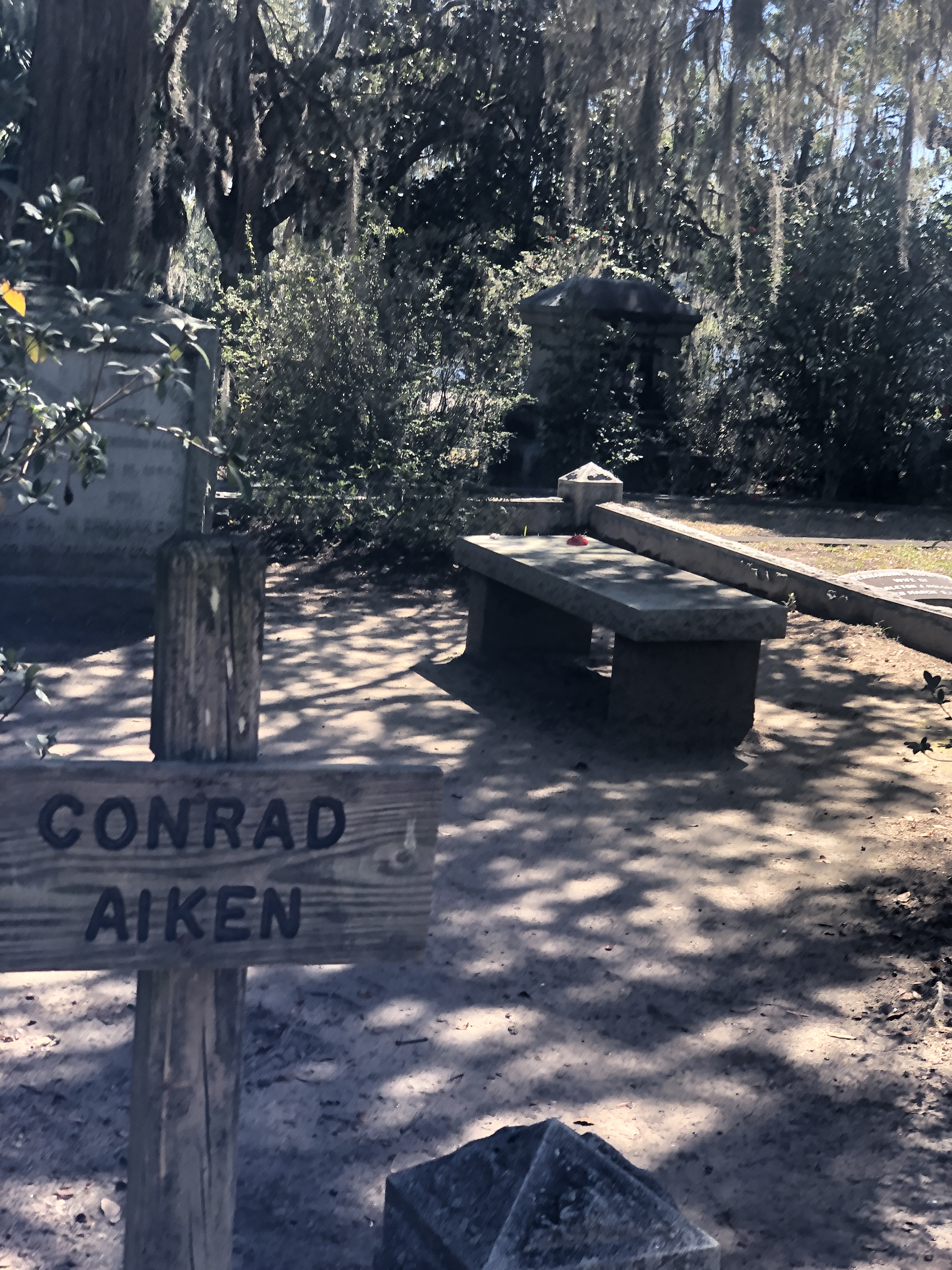
Originally designed as a Victorian cemetery with winding pathways, lots of trees and grass areas, Bonaventure has been a gathering place for family picnics as well as a place of comfort for the bereaved. Probably the most famous residents are songwriter Johnny Mercer and writer Conrad Aiken.

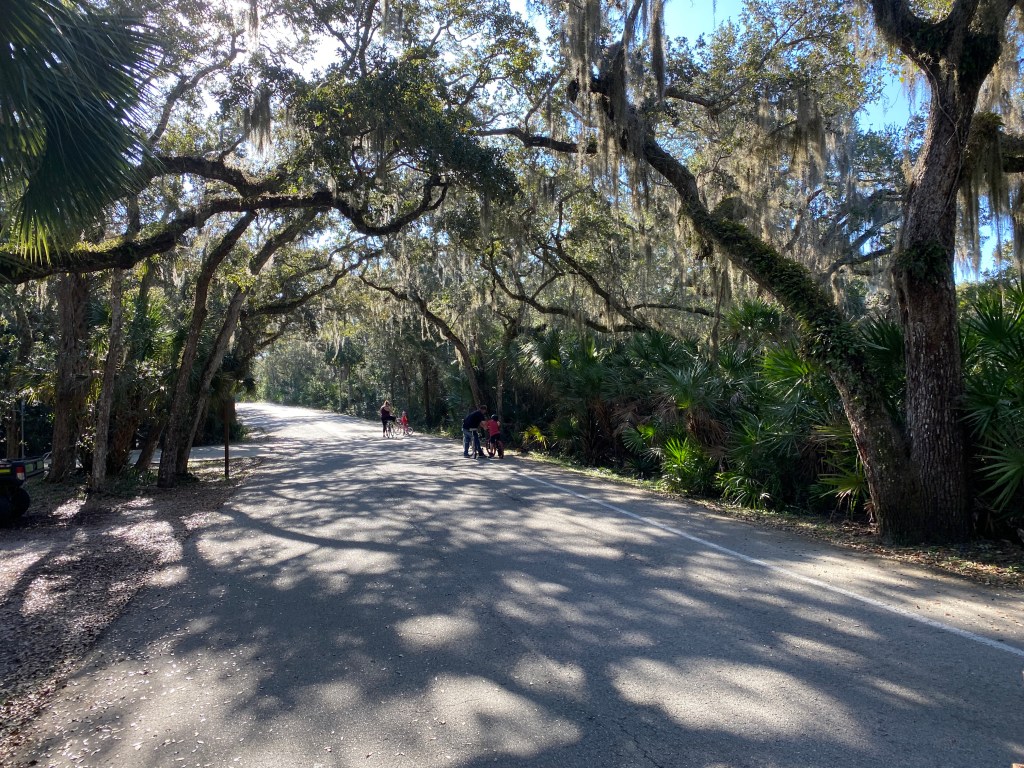
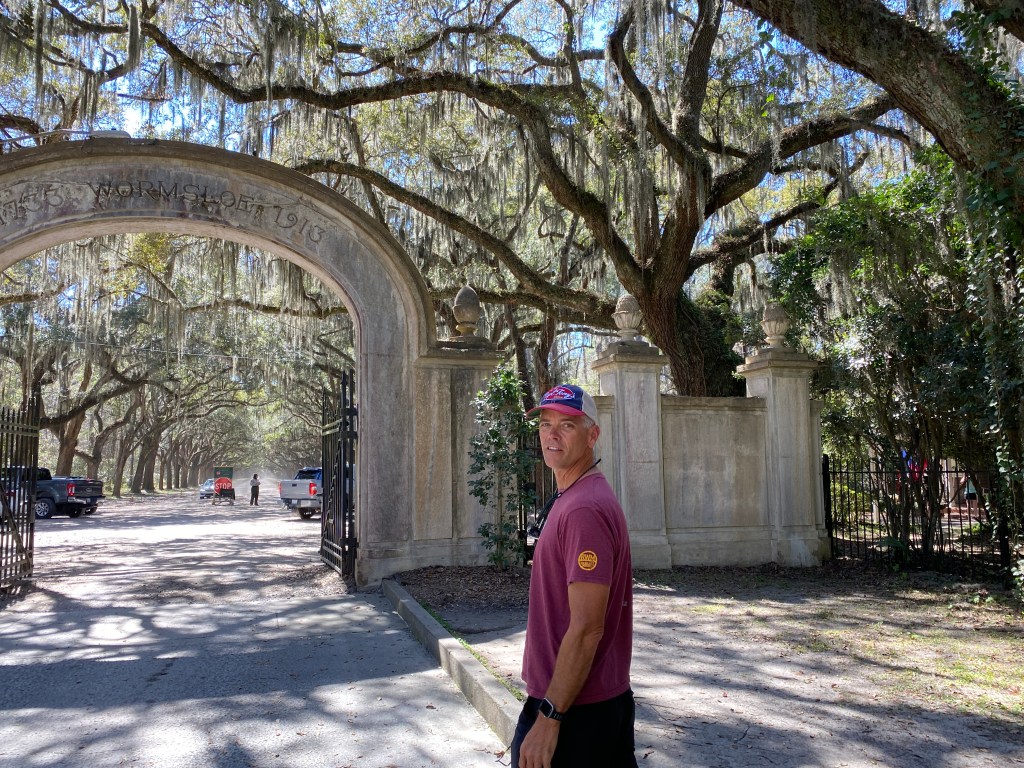
A trip to Savannah is not complete without a visit to Wormsloe Historic Site, the colonial-era estate of Noble Jones, one of the area’s first settlers. The former plantation is the site of the oldest standing structure in Savannah. The ruins of Jones’ 1745 tabby house still overlook the Savannah River and the property was held by his descendants until the state acquired the land in 1973. Most striking is the mile-long archway of live oaks that usher you into the plantation. It’s what you picture a southern plantation should be. 
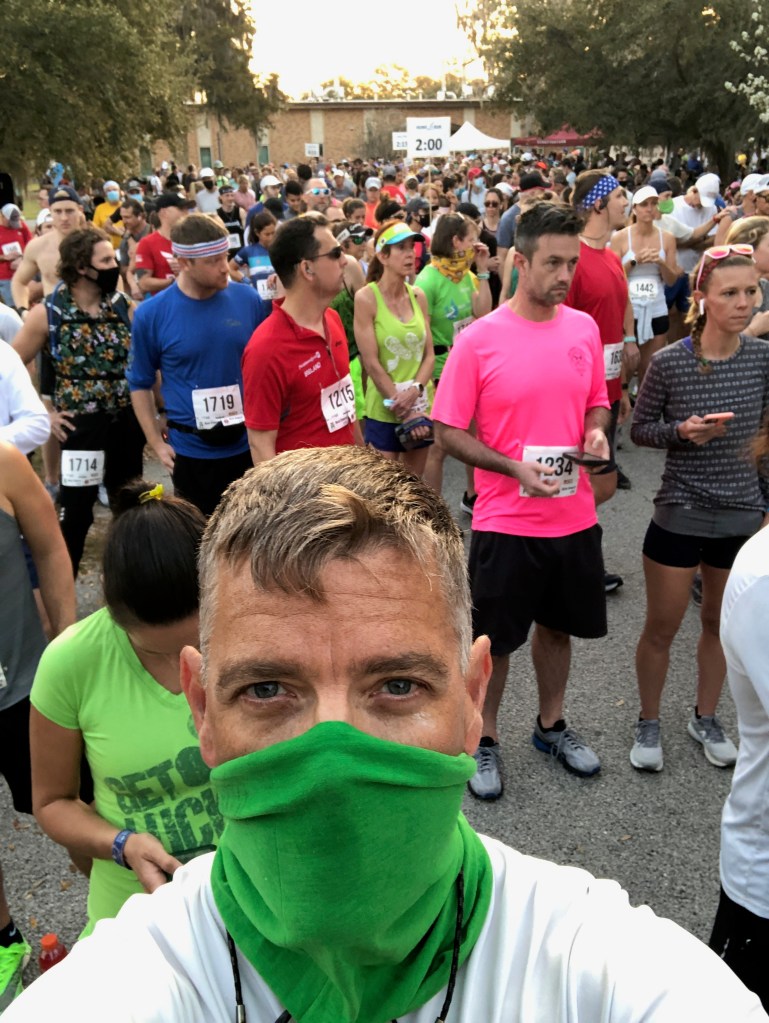
One reason we put Savannah on our itinerary was so that Steve could run his first live marathon since the start of the pandemic. On Saturday morning he rose early, drove out to nearby Skidaway Island and ran 26.2 miles in about four hours. He was rewarded with a medal, new sunglasses, a t-shirt, and claim to running a marathon in Georgia. He’s now marathoned in 19 states and counting…
Our time in the Savannah area coincided with the annual St. Patricks Day festivities. While the annual parade was cancelled due to COVID-19, there was still plenty of Irish spirit, especially out on Tybee Island.

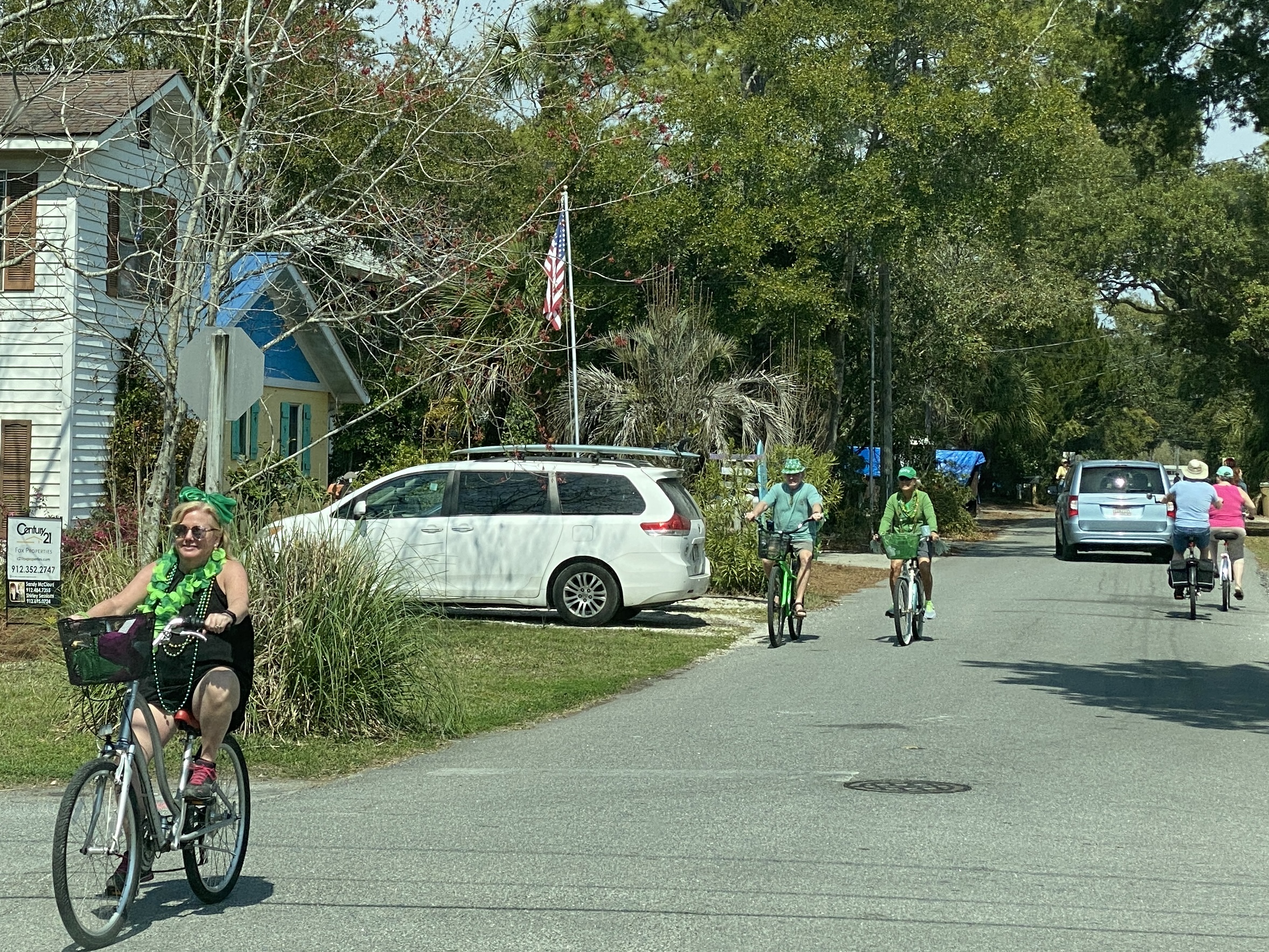
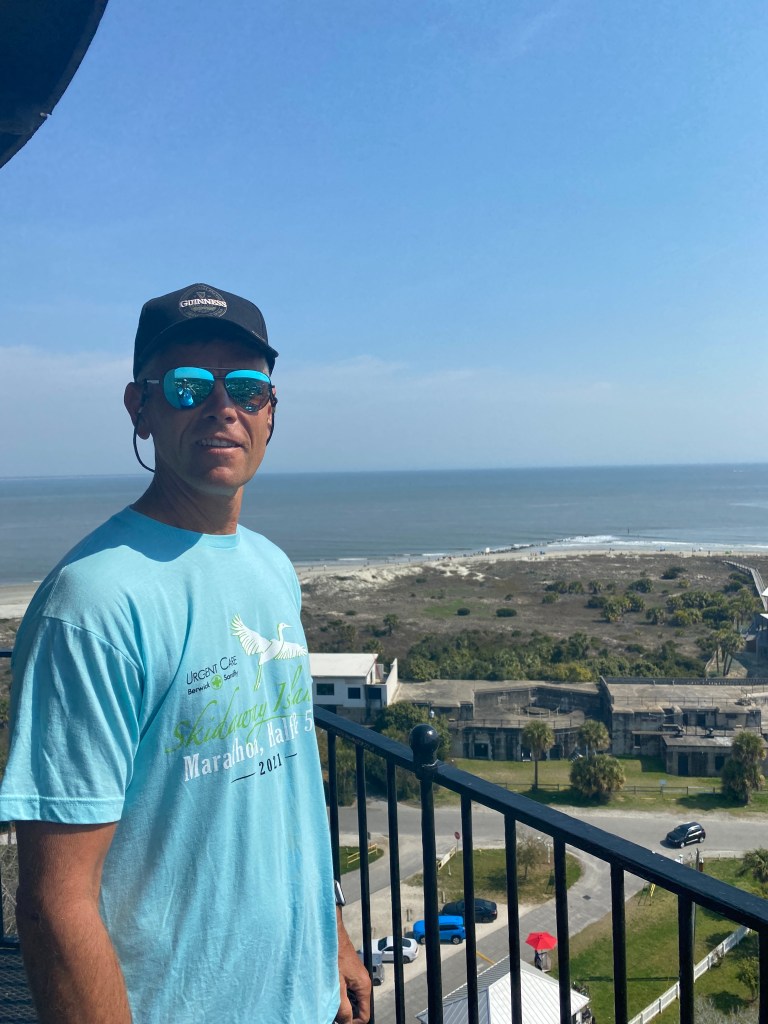
On Tybee we learned about the island’s early military history, including the American Revolution, War of 1812, Spanish American War, WWI, and WWII. The Tybee Island Light Station, originally built in 1773, provided guidance to mariners in the past and now gives tourists sweeping views of the Atlantic and Savannah River. We enjoyed the 178 step climb to the top, as well as our tour of the Keeper’s Cottage. 

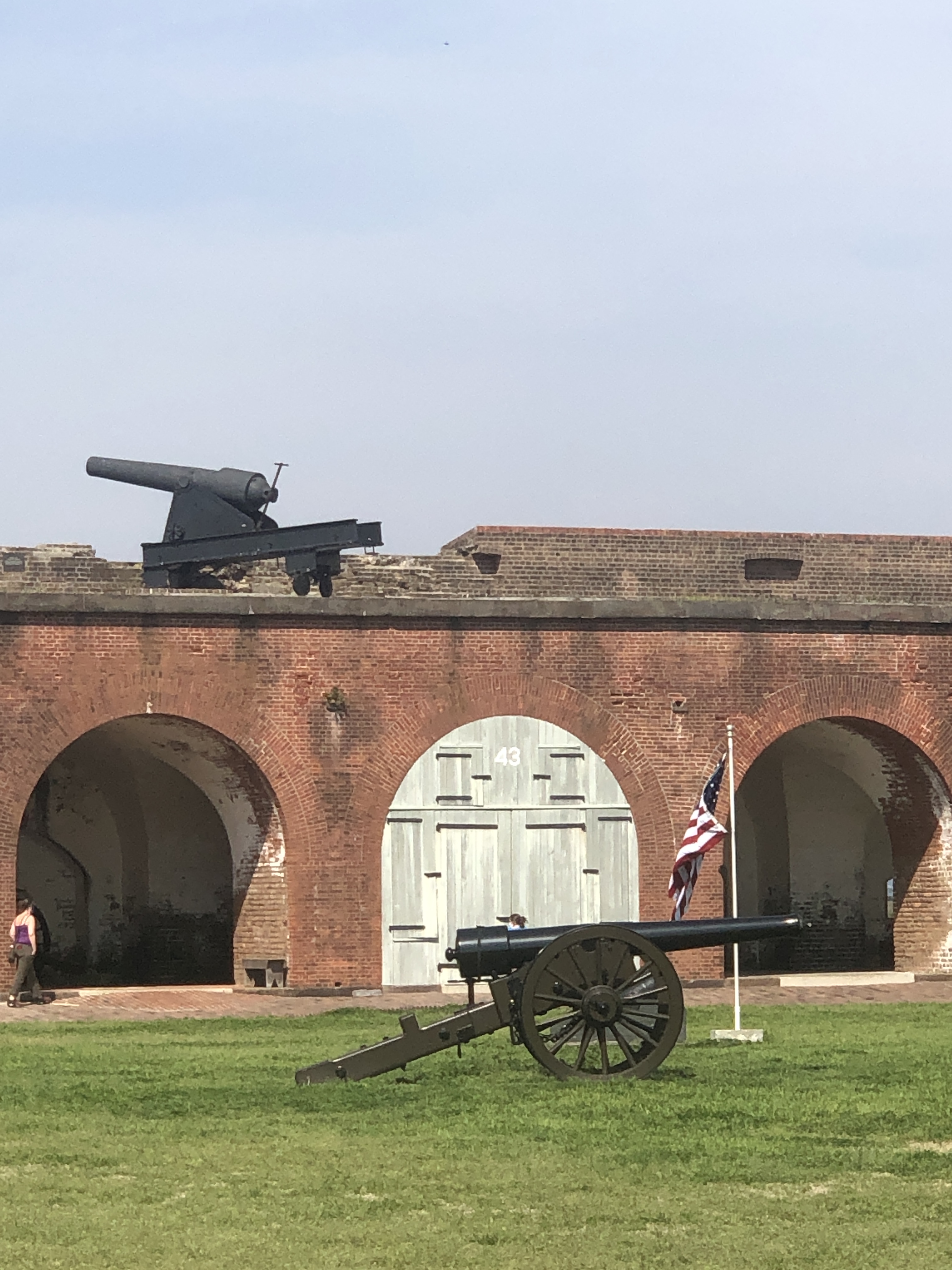
On our way out of Tybee we also stopped in to take a peak at Fort Pulaski. One of a series of forts along the Georgia coastline, the fort was built after the War of 1812 and was, for a time, under Confederate control. Once taken by the Union army, the fort eventually became a prison for Confederate officers. So much history…
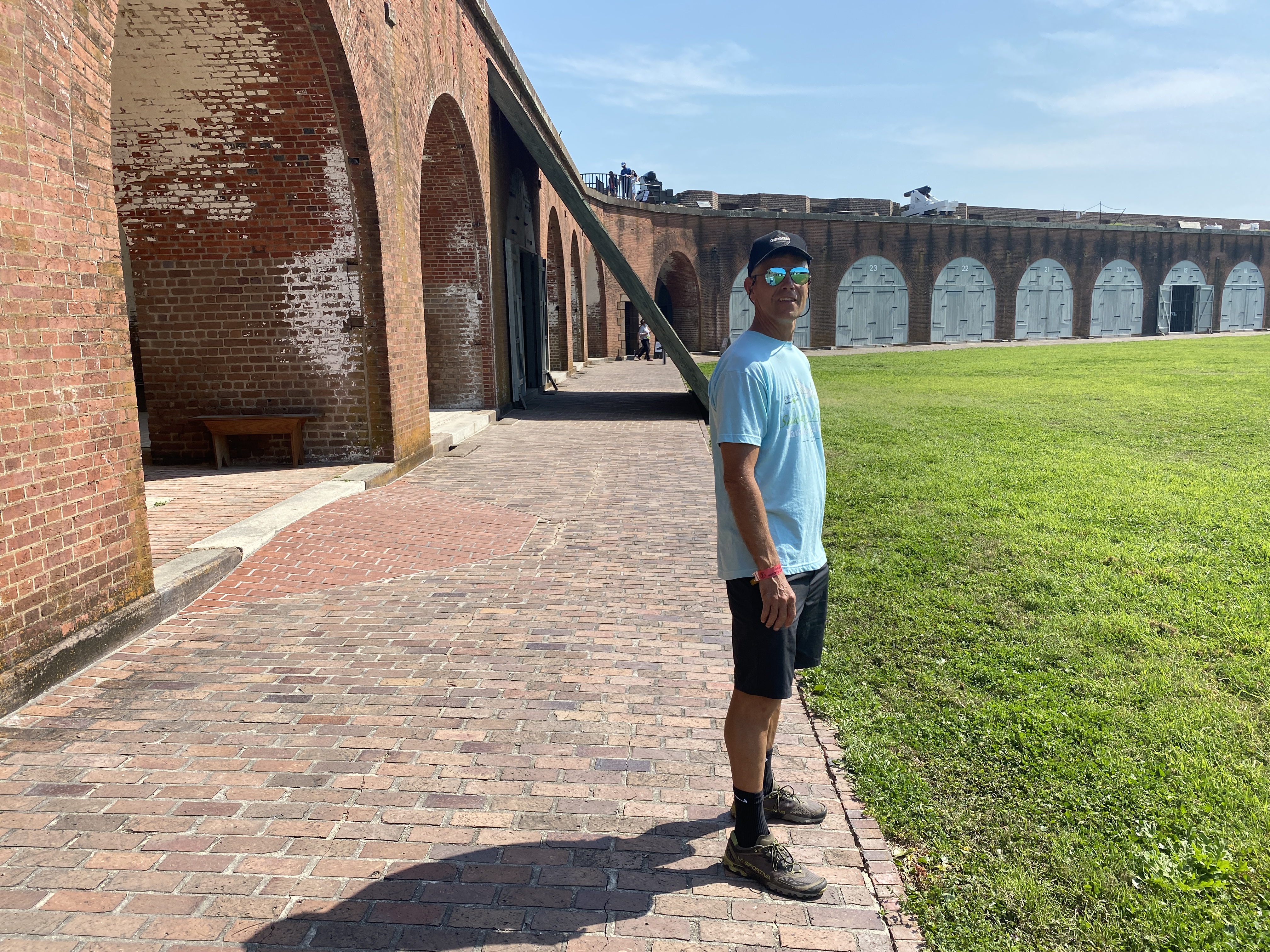
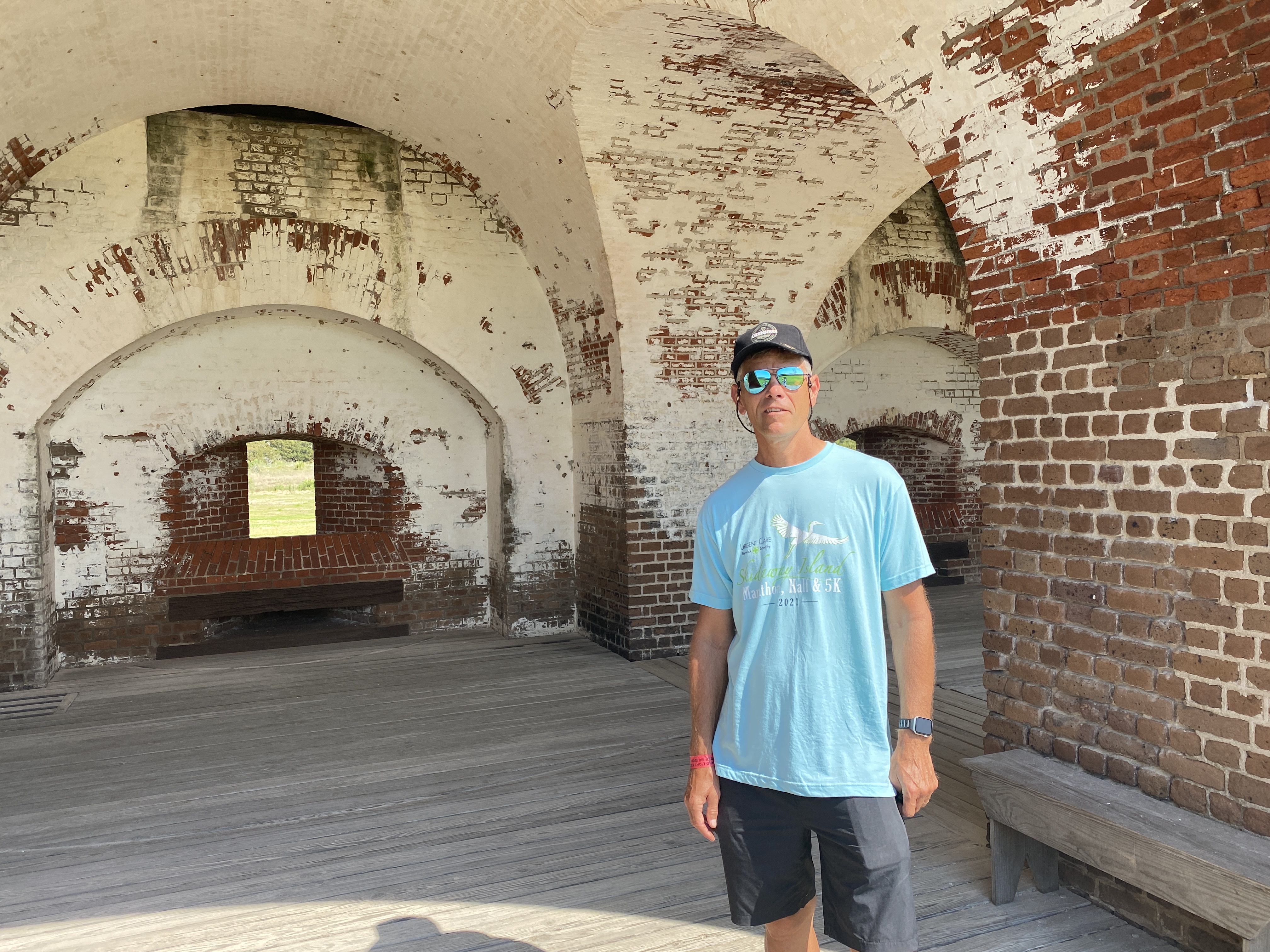
Full exploration of Savannah and the surrounding area takes much more time than we allotted. Next time, we’ll spend more time sitting in the peaceful squares, enjoying the world-famous restaurants, and learning more about this fascinating part of America.
St. Augustine

We found a new favorite place in Florida. Well. . . another favorite place 🙂 We were told St. Augustine was a great city and now we know why. In fact, we ended up spending a few extra days than originally planned.
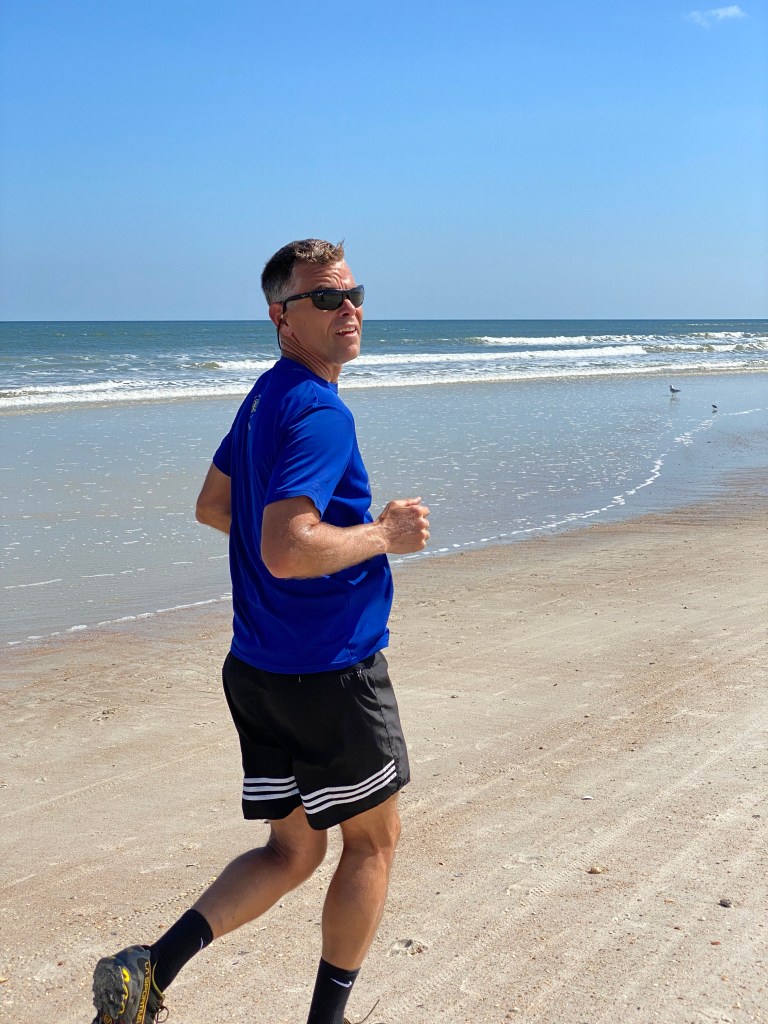
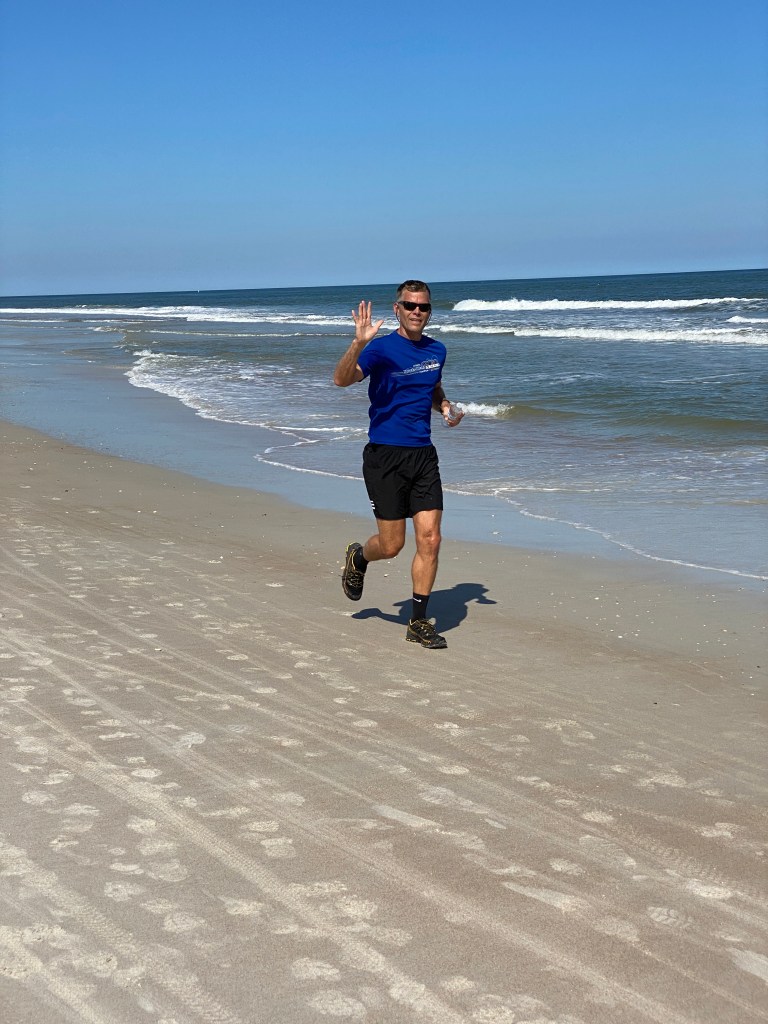
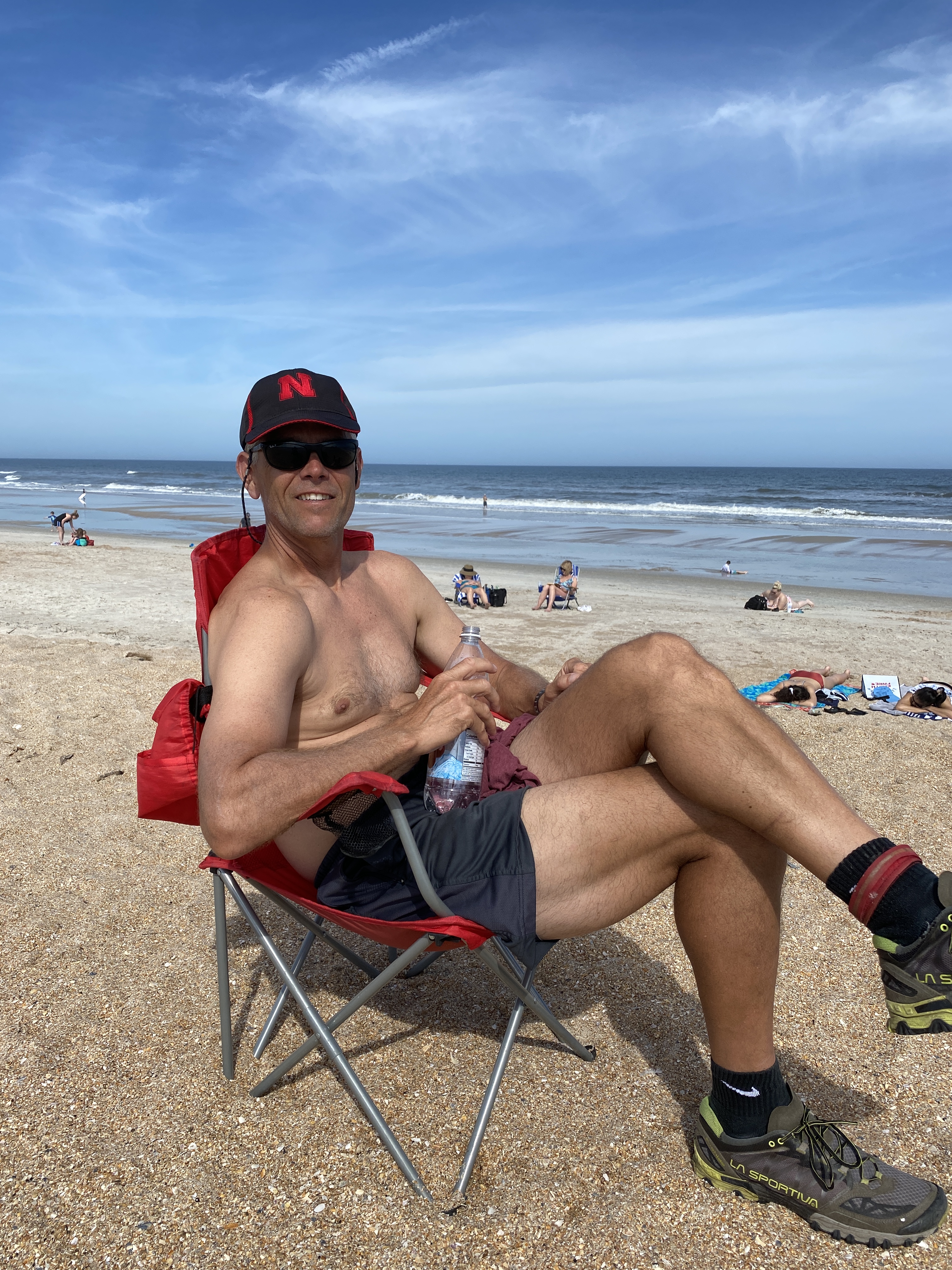
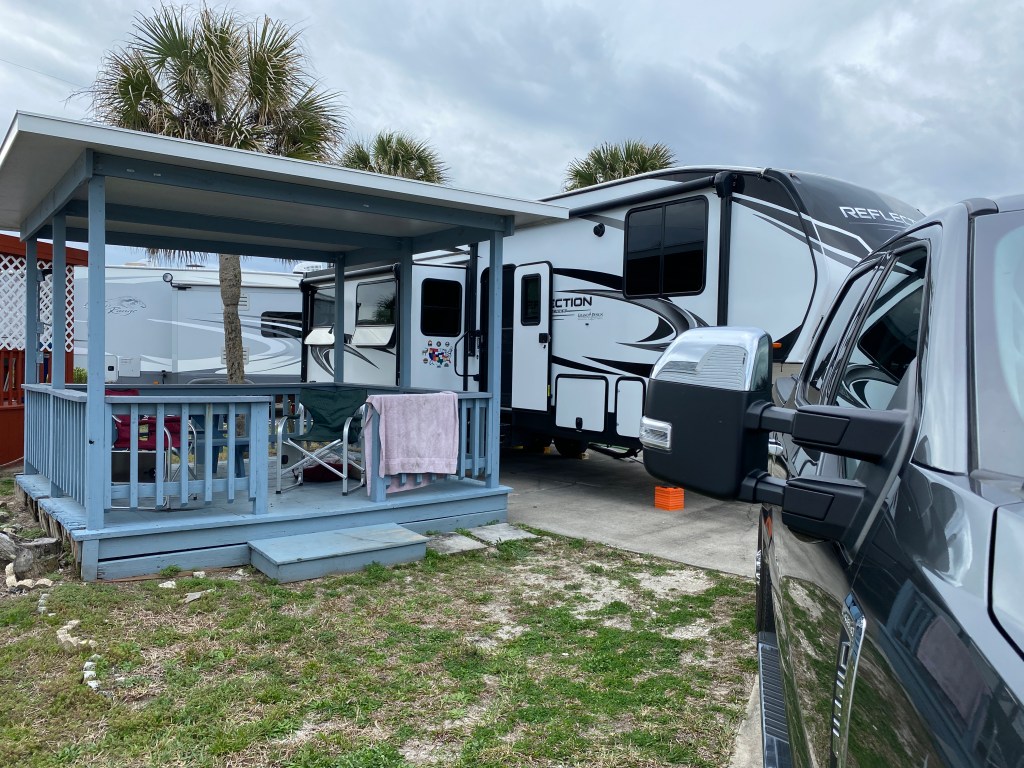
Our first stay was at the Bryn Mawr Ocean Resort, just south of St. Augustine and right on Butler Beach. The park was not our favorite, but it didn’t matter because we were right on the beach and were able to take advantage of some beautiful weather. The beaches were wide and uncrowded and perfect for running and biking.

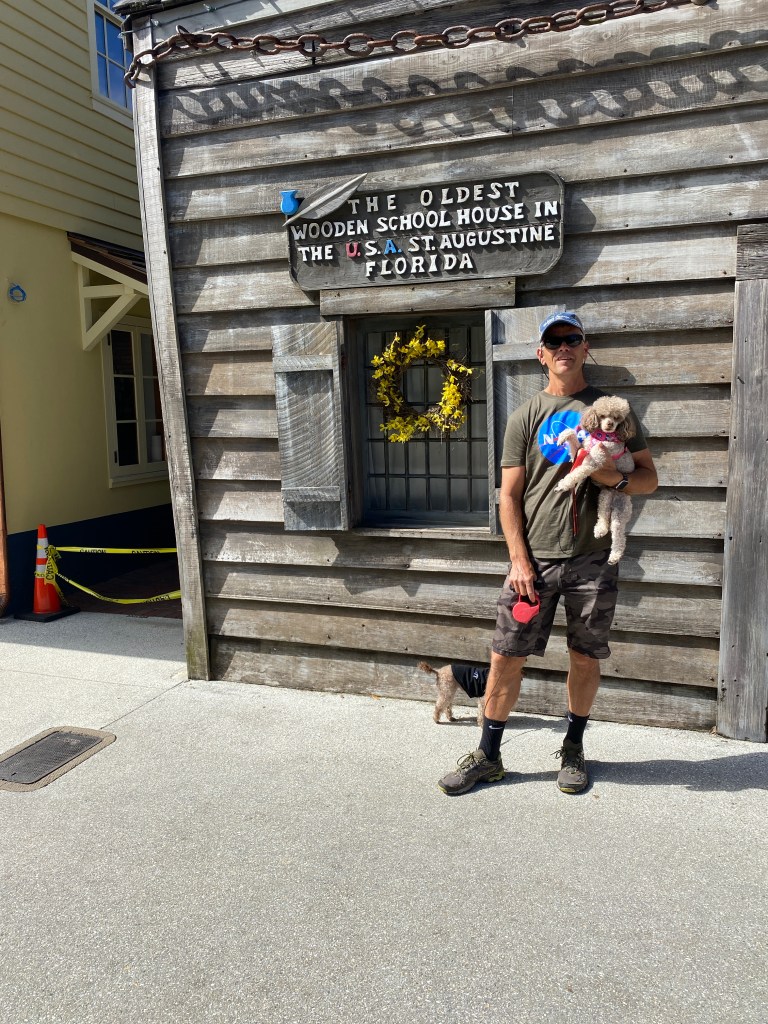
In between beach time, we went into St. Augustine and wandered the nation’s oldest city. Founded in 1565 by Spanish explorers, the city went from Spanish to British and back to Spanish control until it was ceded to the United States in 1819. The history here is deeper than we could have ever explored during our time. The Old Town Trolley tour we took gave us a good overview.

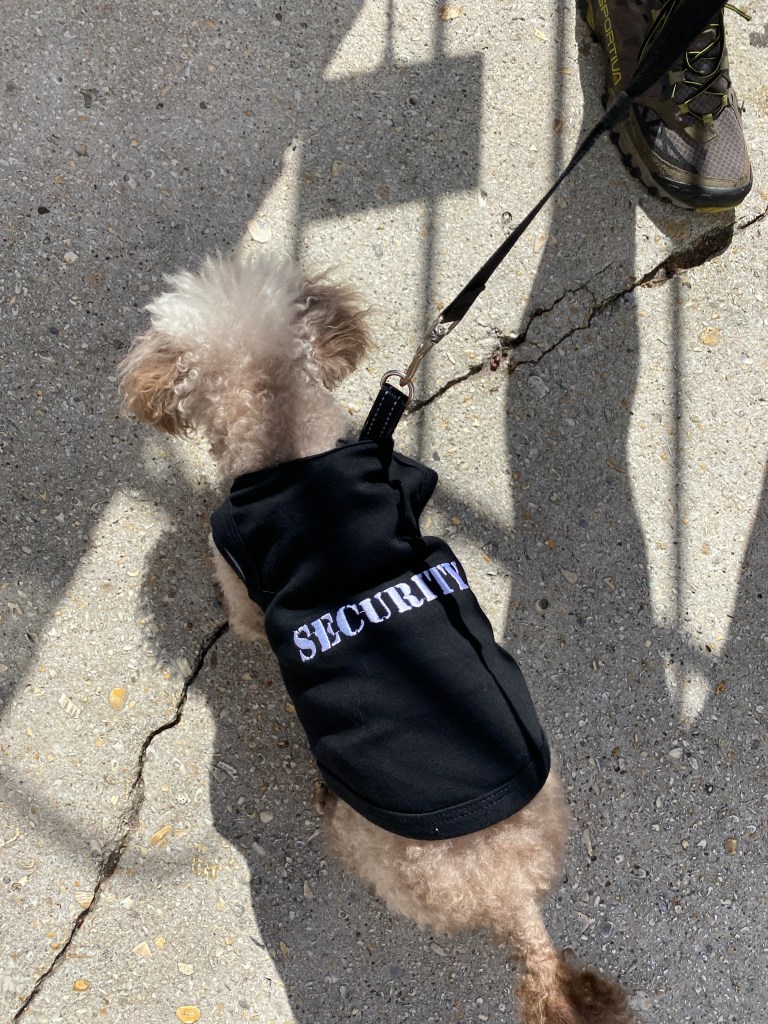
We also enjoyed wandering the old, narrow streets, one day in the sunshine and another day in the rain. Even Bob and Mia enjoyed window shopping and Bob got a new shirt!

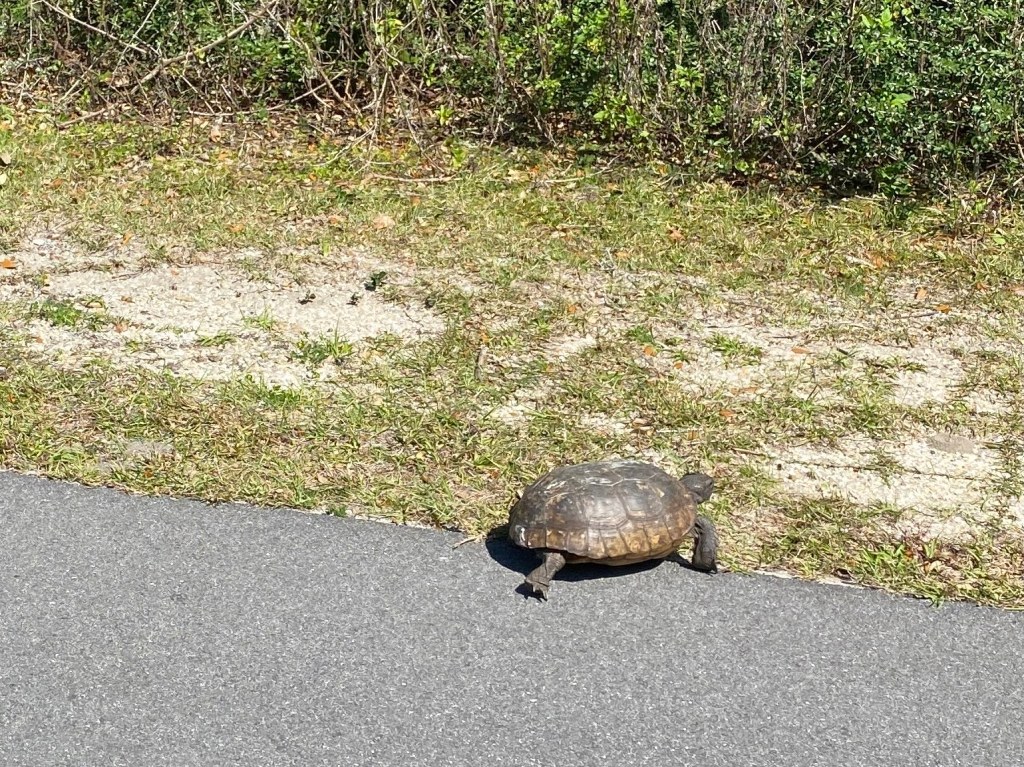
After a few days at Bryn Mawr we moved up the beach to the incredible Anastasia State Park. We were lucky to score three days here, where people book campsites up to a year in advance. With a robust turtle habitat and the occasional snake next to the campsite, we settled in for a fun weekend. The park’s beach goes on forever and we got lucky with three gloriously sunny days which we spent on the beach, in the park, and at the campsite.

On Saturday mornings, adjacent to the park, the Old City Farmers Market is held. We walked to the market without thinking that if we bought fresh stuff we’d have to carry it back. It was only about a mile walk, and Steve just added it to his workout records!

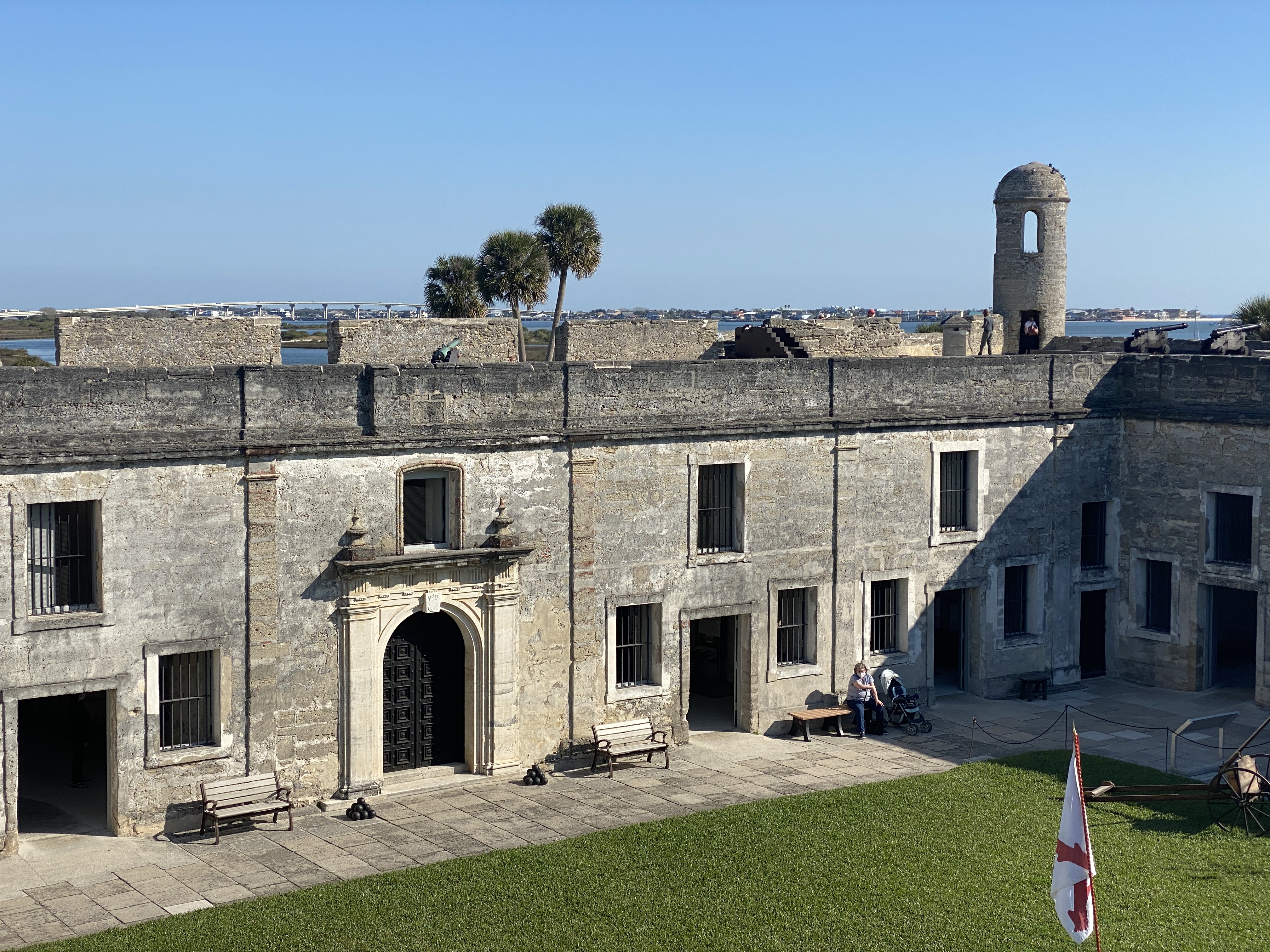
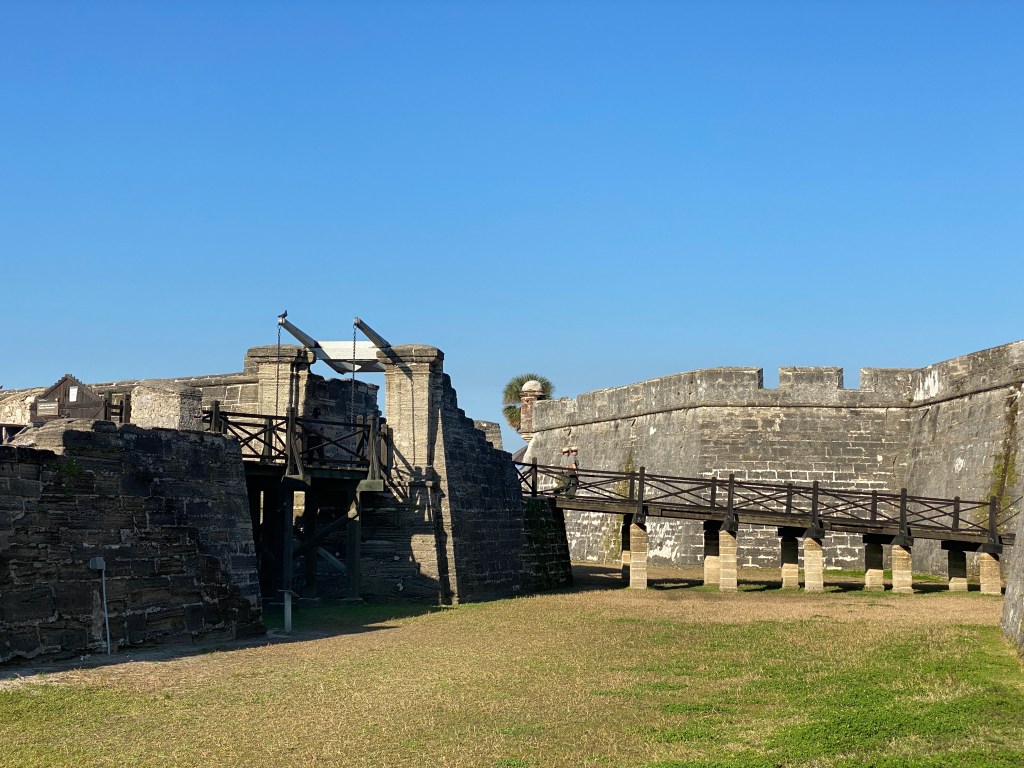
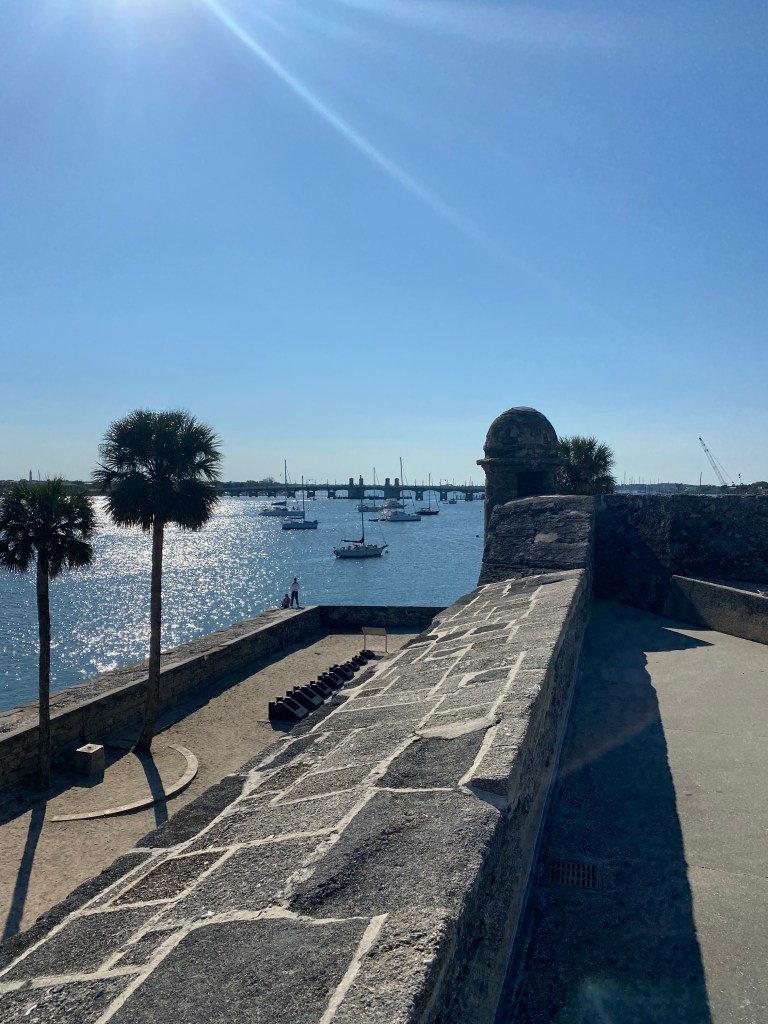
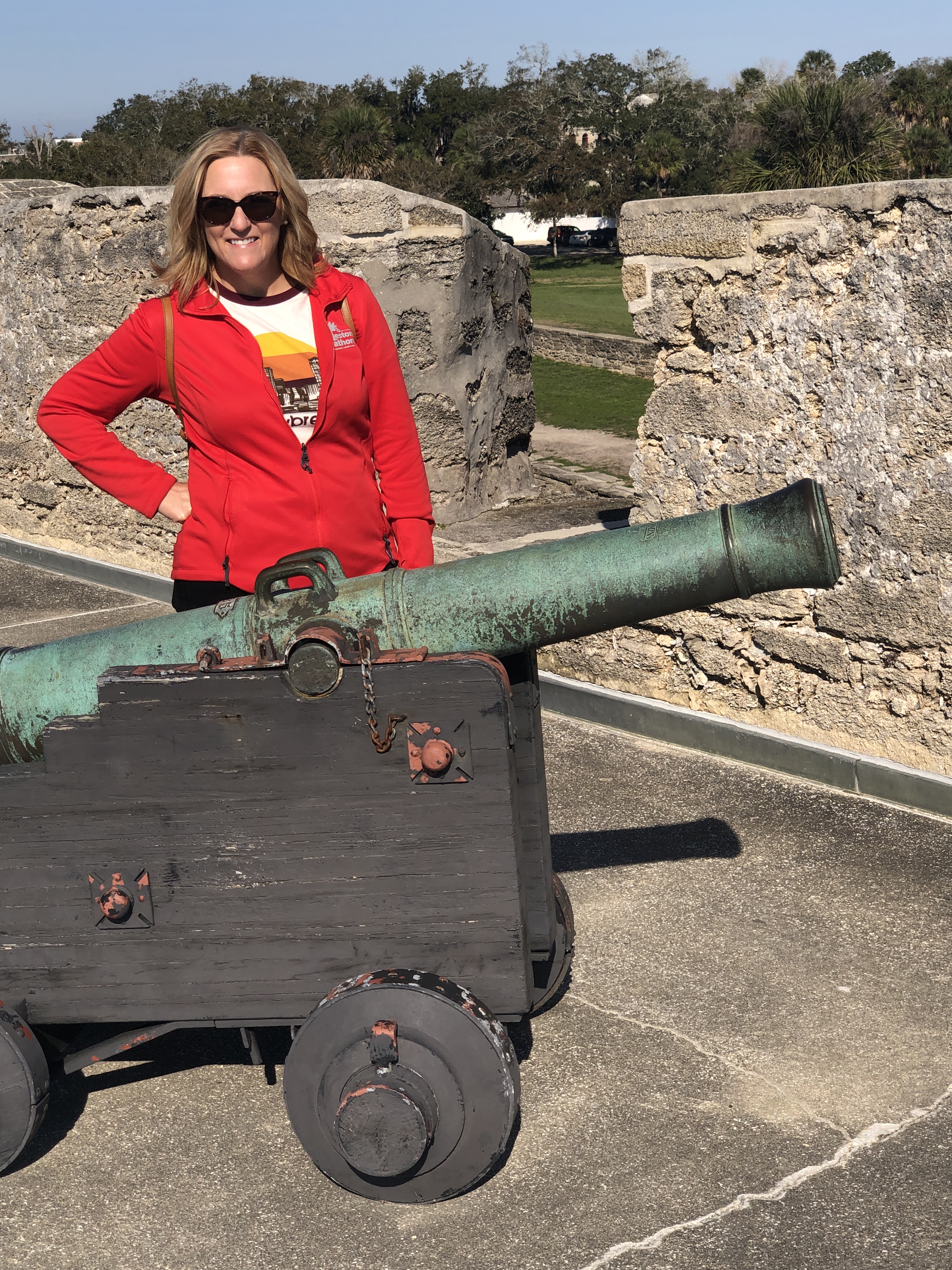
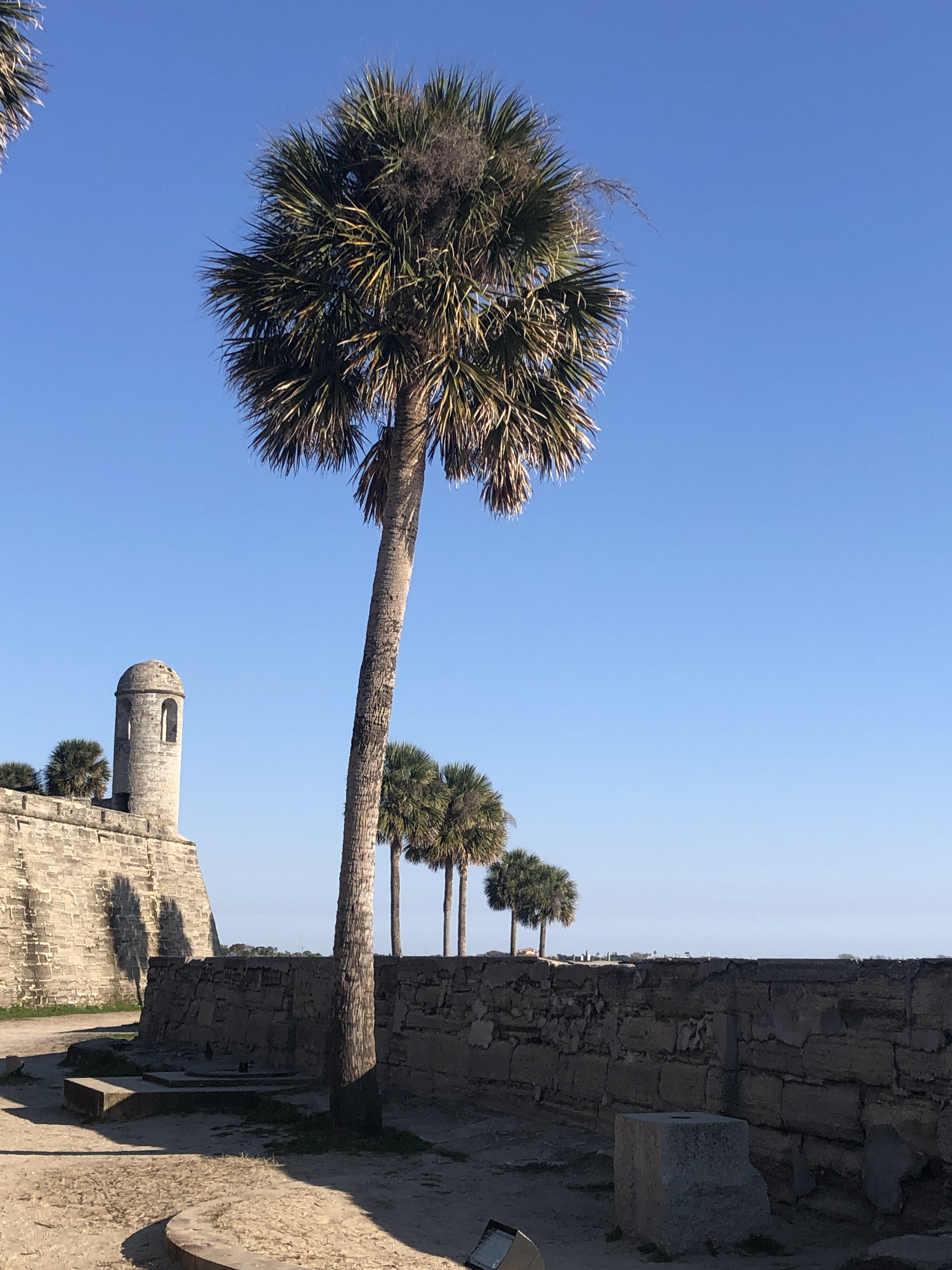
The centerpiece of St. Augustine is the impressive Castillo de San Marcos National Monument. The oldest masonry fort in the United States dates back to 1672 when it was first constructed by the Spanish out of the local coquina quarried from the land that is now Anastasia State Park. The seashell-based stone has stood the test of time.

We wandered the grounds from bottom to top and absorbed the history as best we could. Through two Spanish periods, a British occupation, the Civil War, and now hoards of tourists, the fort has protected St. Augustine from invaders, served as a military prison for members of various Native American tribes, and been a popular tourist destination. 

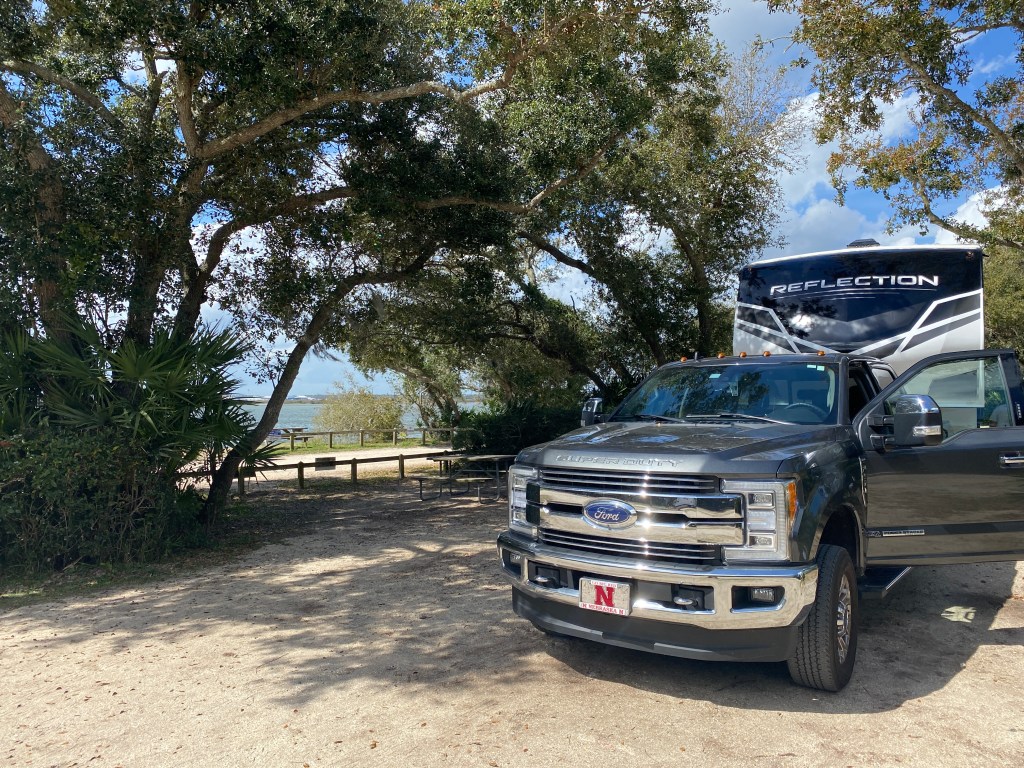
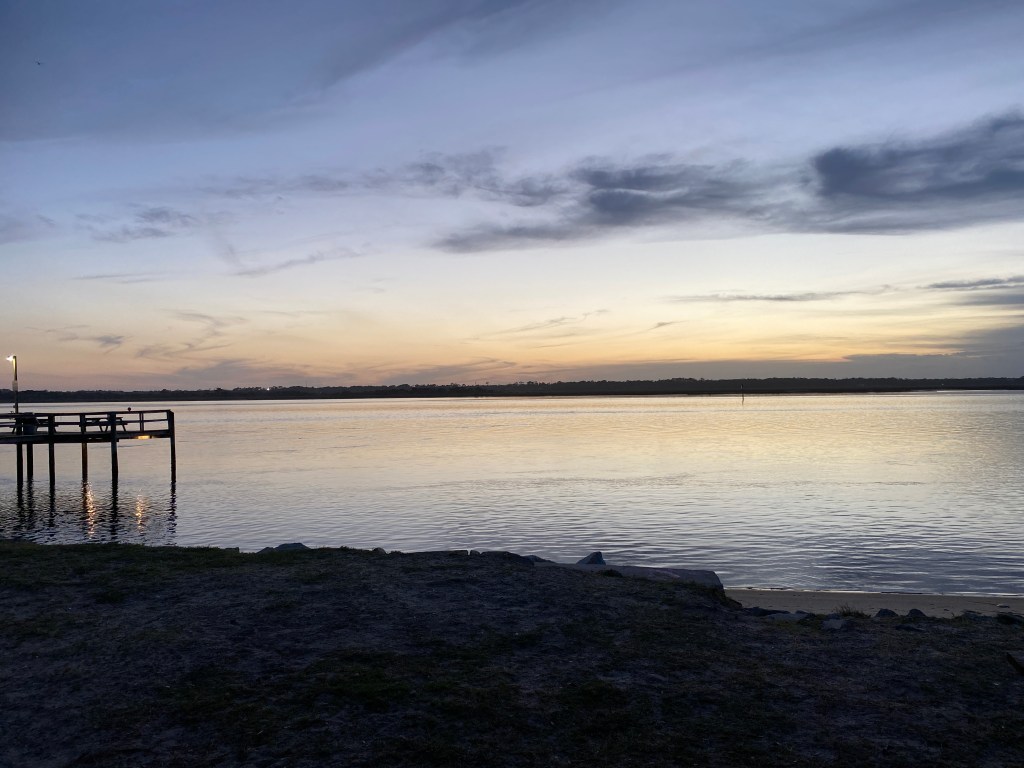
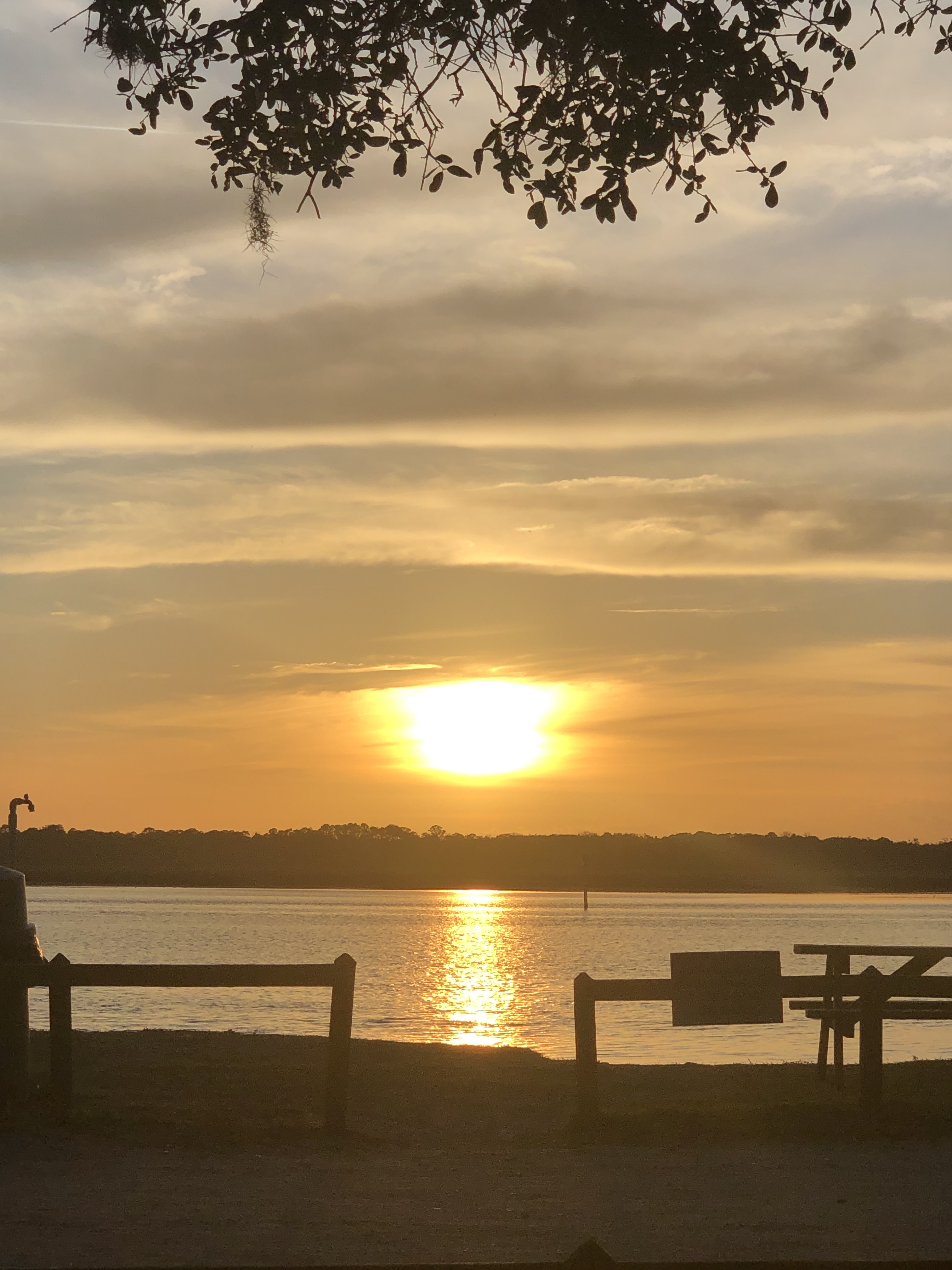
Just when we thought our time in St. Augustine was coming to an end, we learned of a vacancy at the North Beach Camp Resort where we could stay for two more days. The site, the premier site in the campground, put us facing the Intercoastal Waterway with views of fishing boats, dolphins, and great sunsets. It was only two days, but we enjoyed a little extra time in this beautiful area.

We’re now heading north and have more adventures planned. Stay tuned!

HipCamp, the Suwannee, and World Class Horses

Over the past ten days we’ve been bopping around north central Florida. There’ve been no major adventures, but we have had some fun. Here’s a quick recap.

After leaving Cape Canaveral we headed inland to just outside of Ocala. We tried out a new booking option called Hipcamp, which is an app that’s kind of like Airbnb for camping. Landowners list their spaces, specify the services they can offer, and travelers like us can book right on the app.

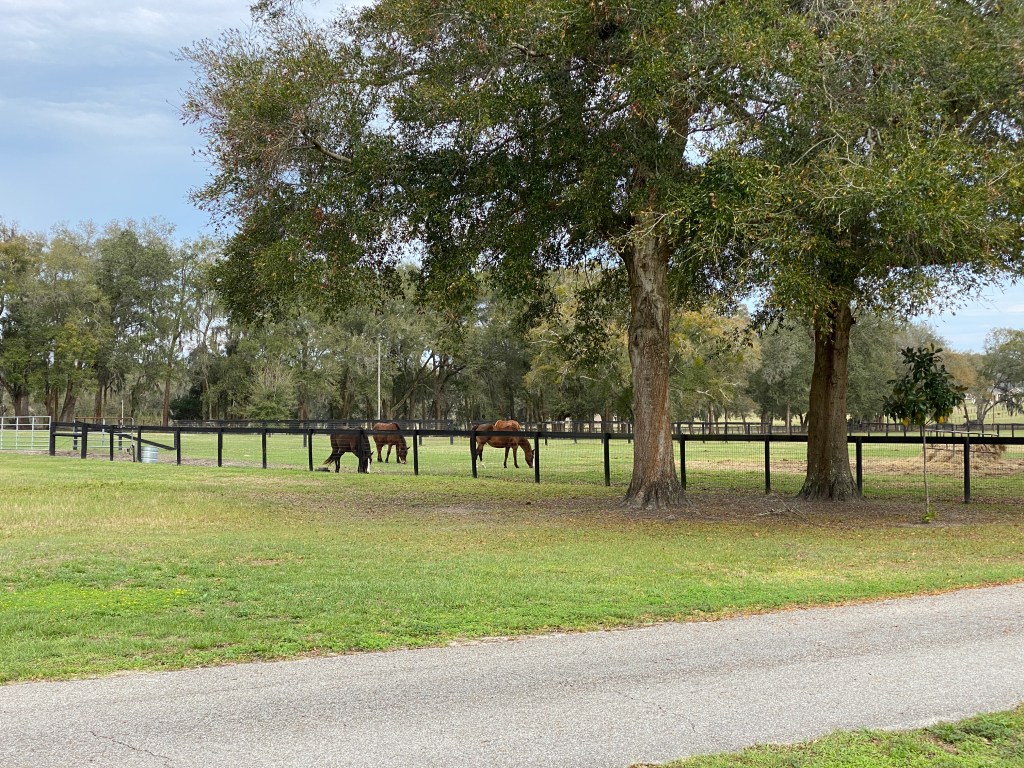
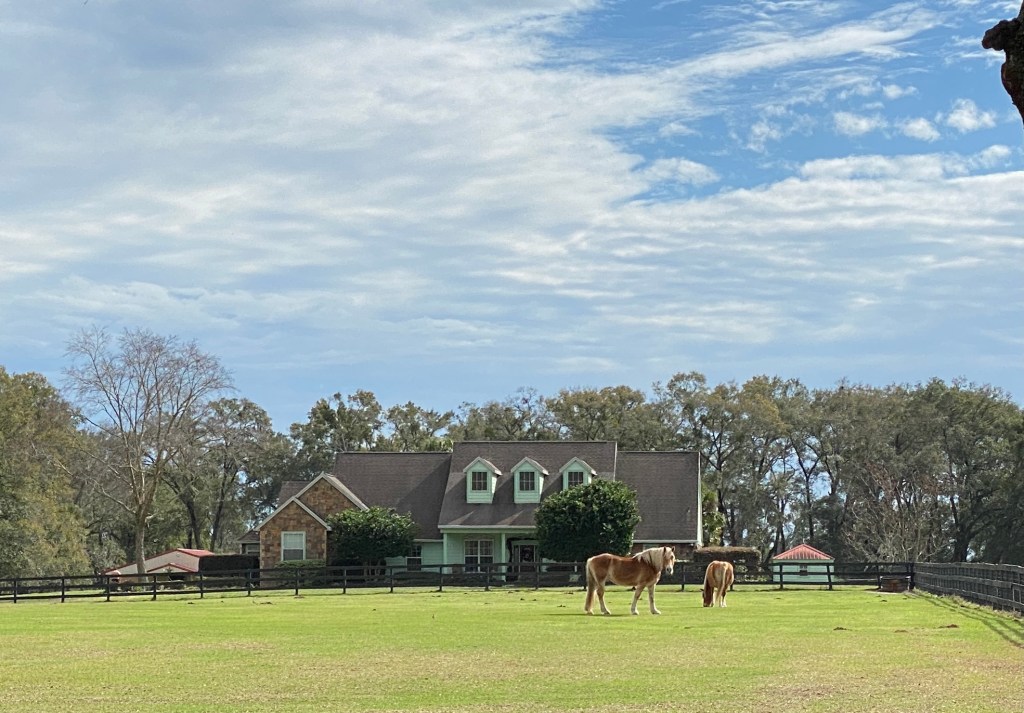
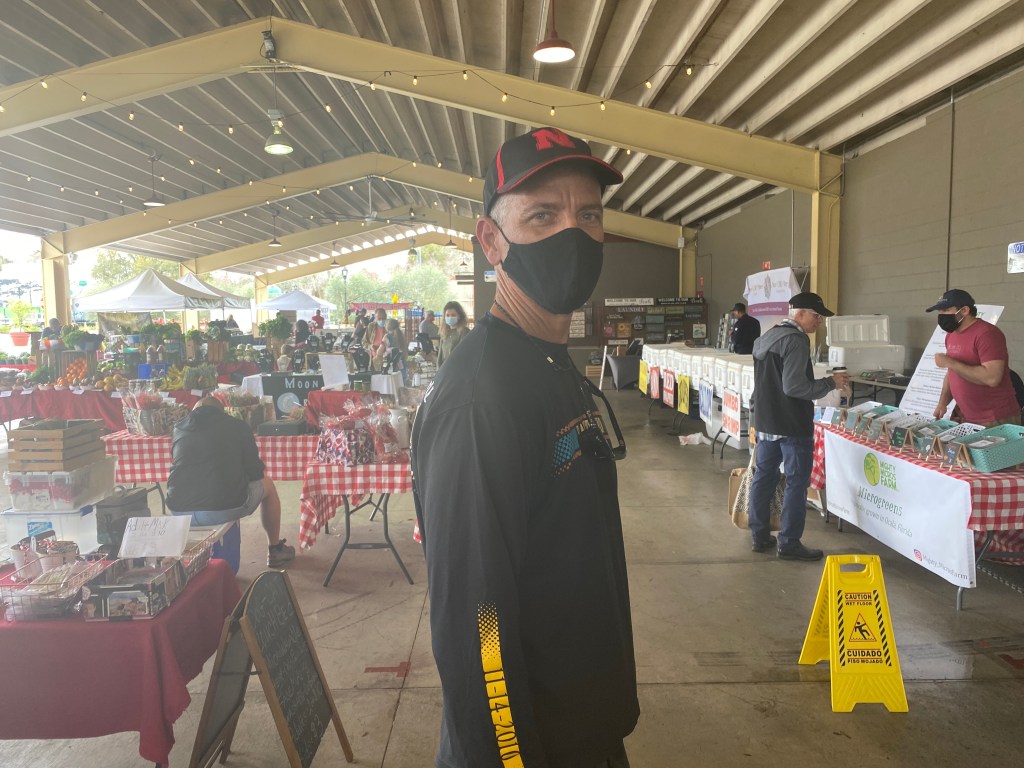
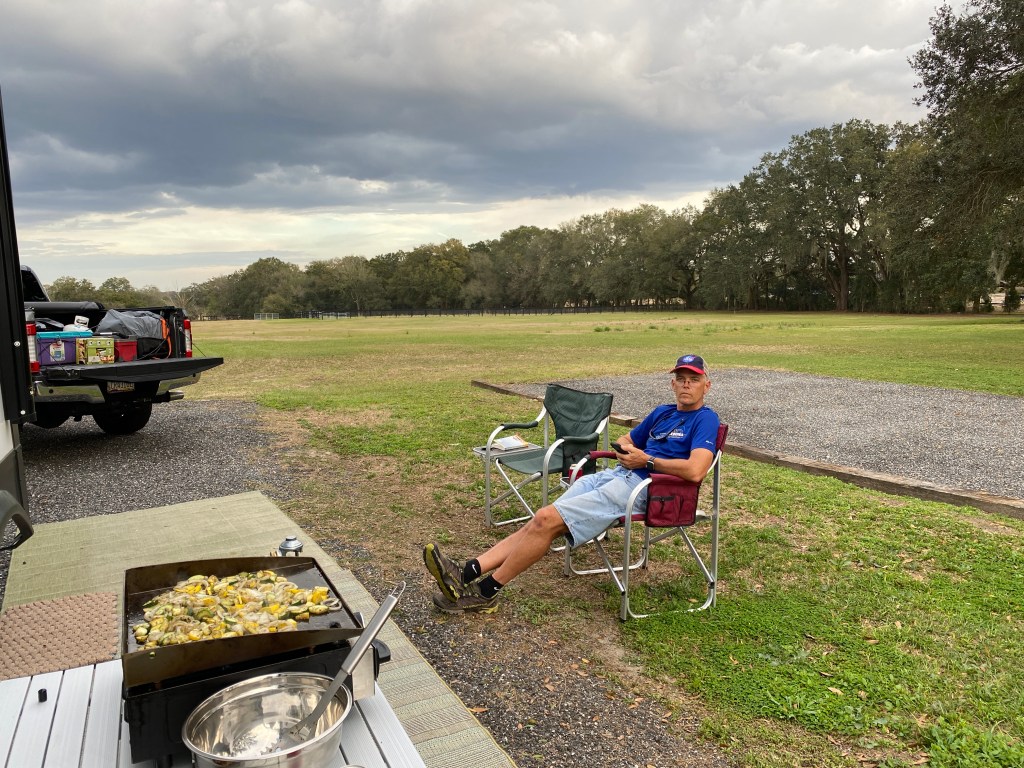
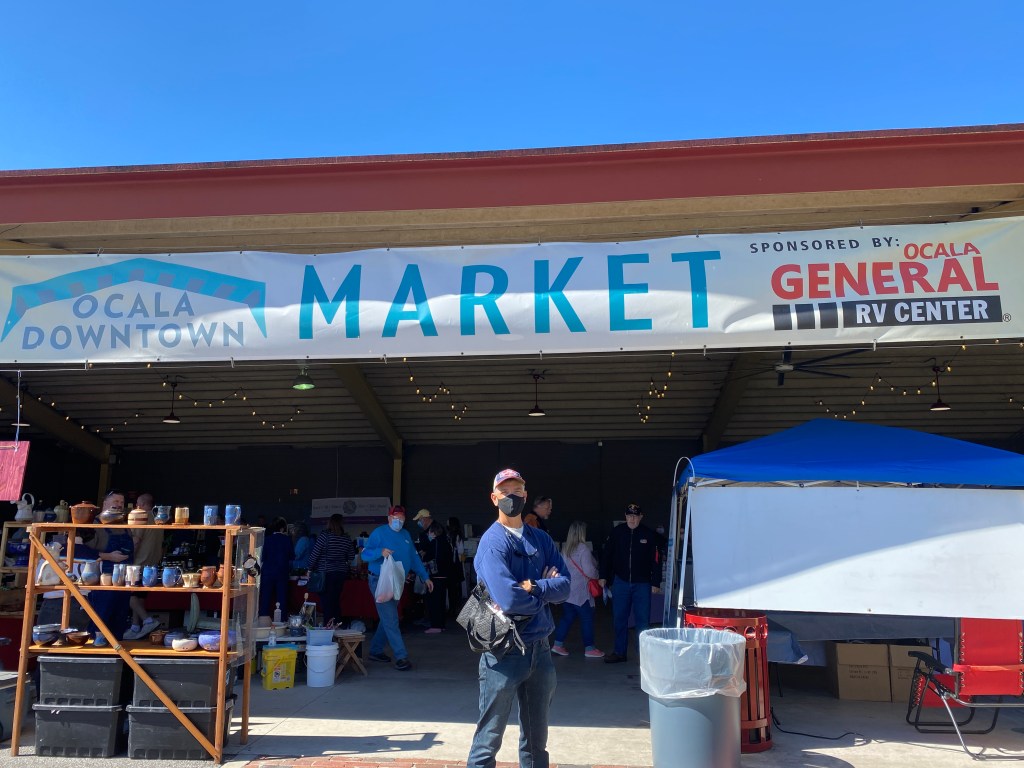
We were lucky to find The Homestead in Anthony, FL and the ranch of Allison Cumley. Allison welcomes RVers with full-hookups located on her 25 acre ranch that is home to cows, horses, a donkey, and numerous dogs. We loved the beautiful setting which gave us an opportunity to explore the nearby Ocala countryside. We hit the farmer’s markets but spent most of the time indoors to stay away from the rain. 

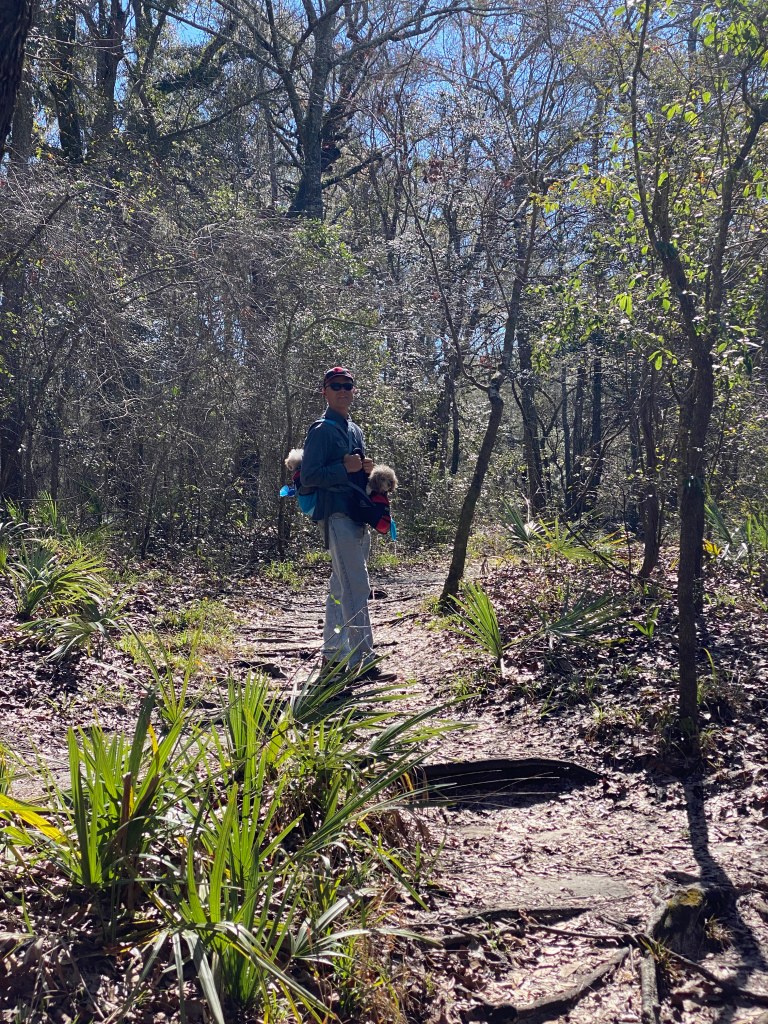
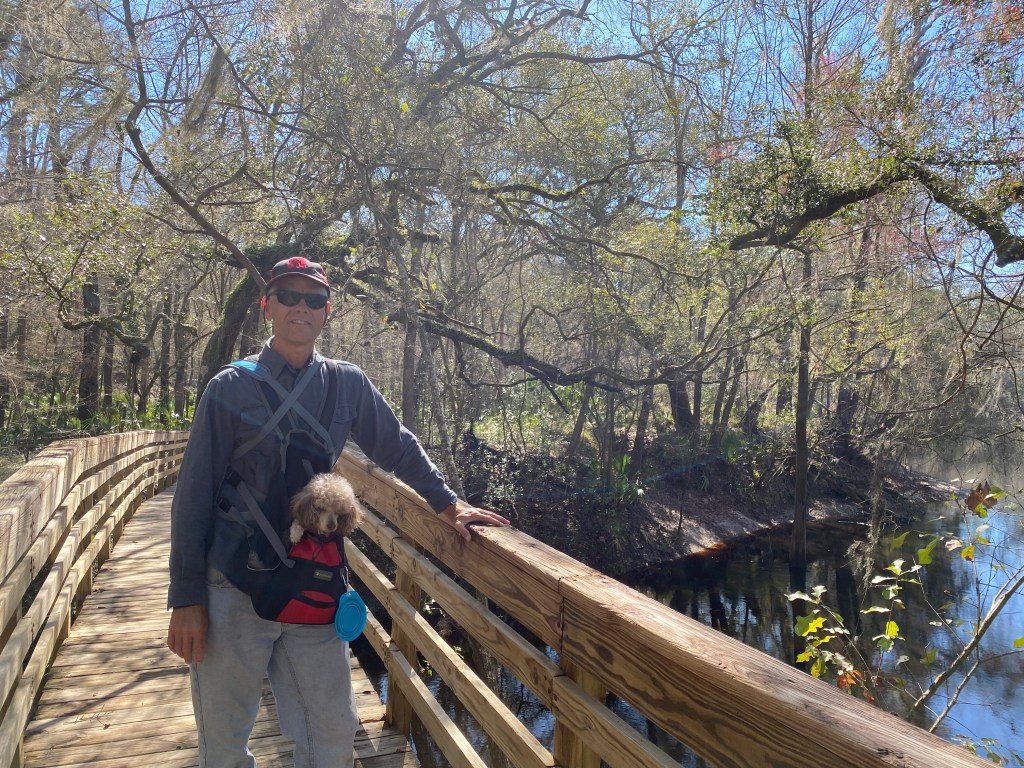
The rain persisted off and on throughout our next stop: Suwannee River State Park. Another great Florida state park, this campground was a beautiful setting right along the river, and we enjoyed a few nice hikes.

We learned that we were a little too far north to avoid the terrible winter weather that hit most of the country last week. In fact, we experienced tornado warnings one night and received about two inches of rain on another night. It was pretty chilly too! Still we were grateful to be out of the path of the worst weather unlike our family in the midwest. 

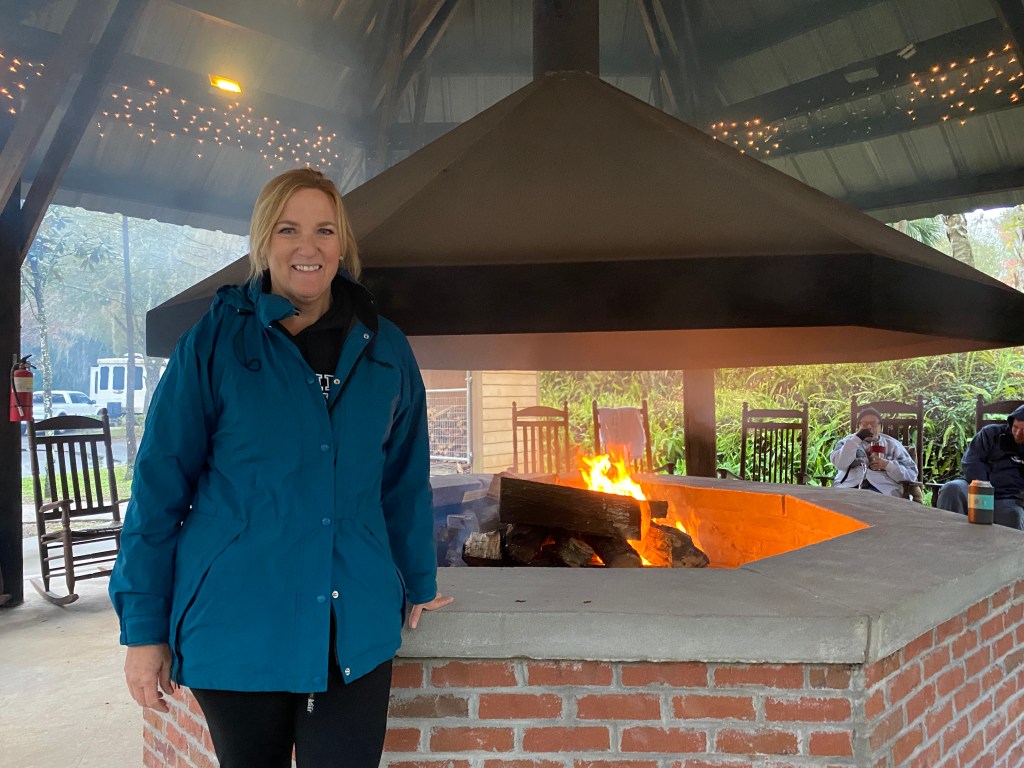
From Suwannee River we headed south again to the cute little town of Williston. We were really impressed with Williston Crossing RV Resort and the very warm welcome we received. Upon arrival we were invited to join others around the roaring fire that night. Everyday the resort has activities and events (pickle ball, poker, live music, etc.) and the people were super friendly. 

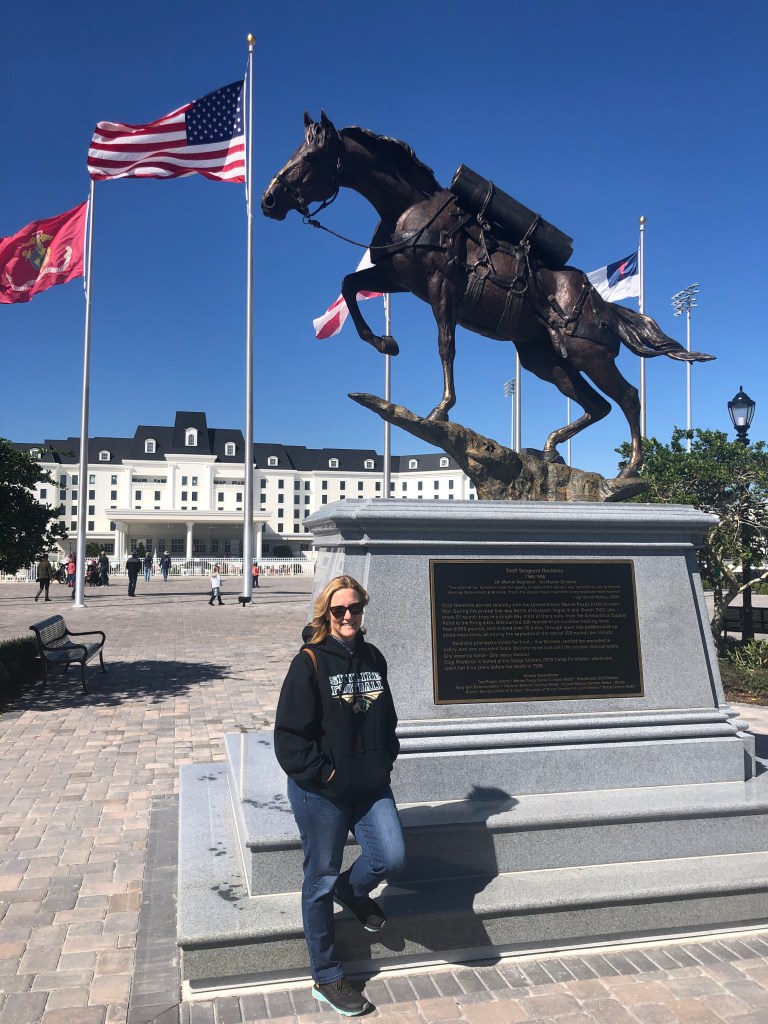
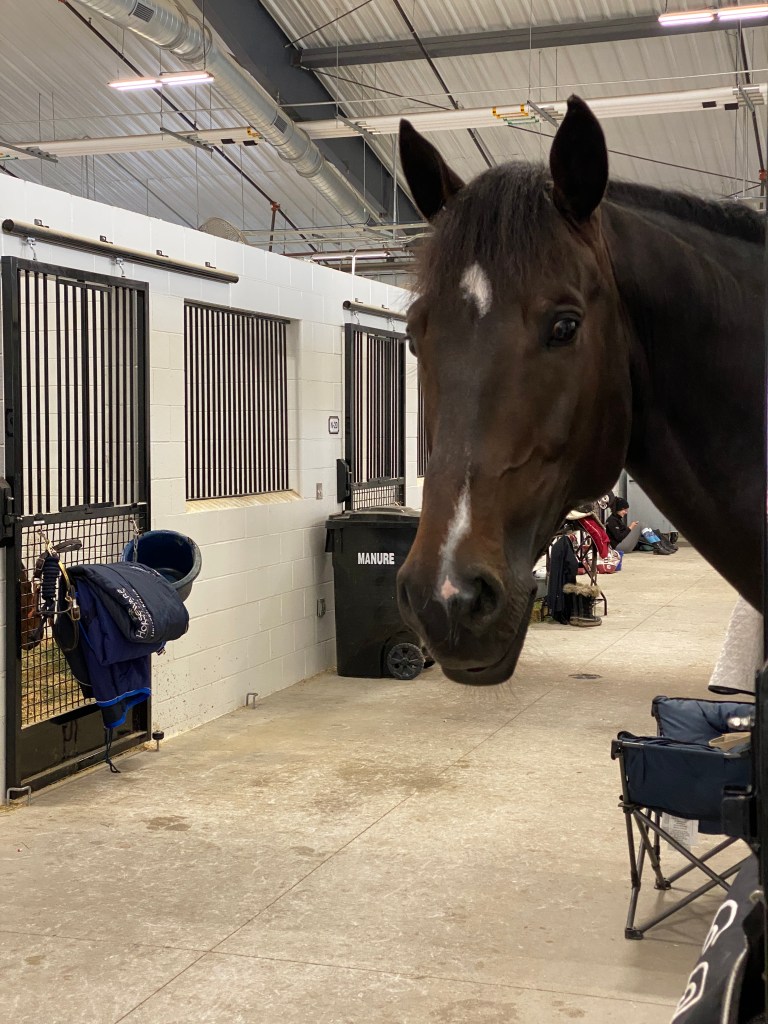
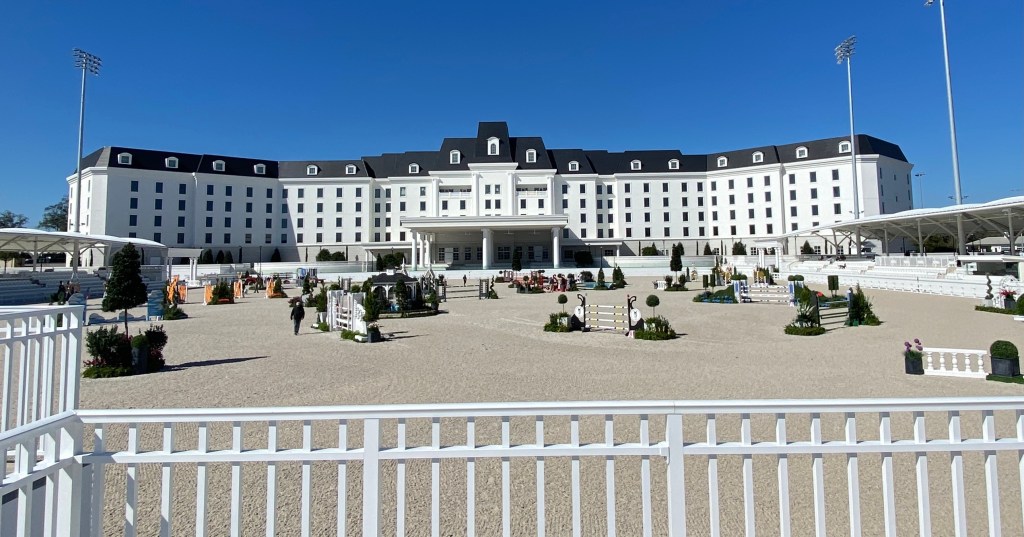
As the weather turned beautiful again we were able to get out and enjoy some new adventures. For me the biggest highlight was exploring the newly opened World Equestrian Center in Ocala. Having grown up showing horses, this place was like Disneyland.

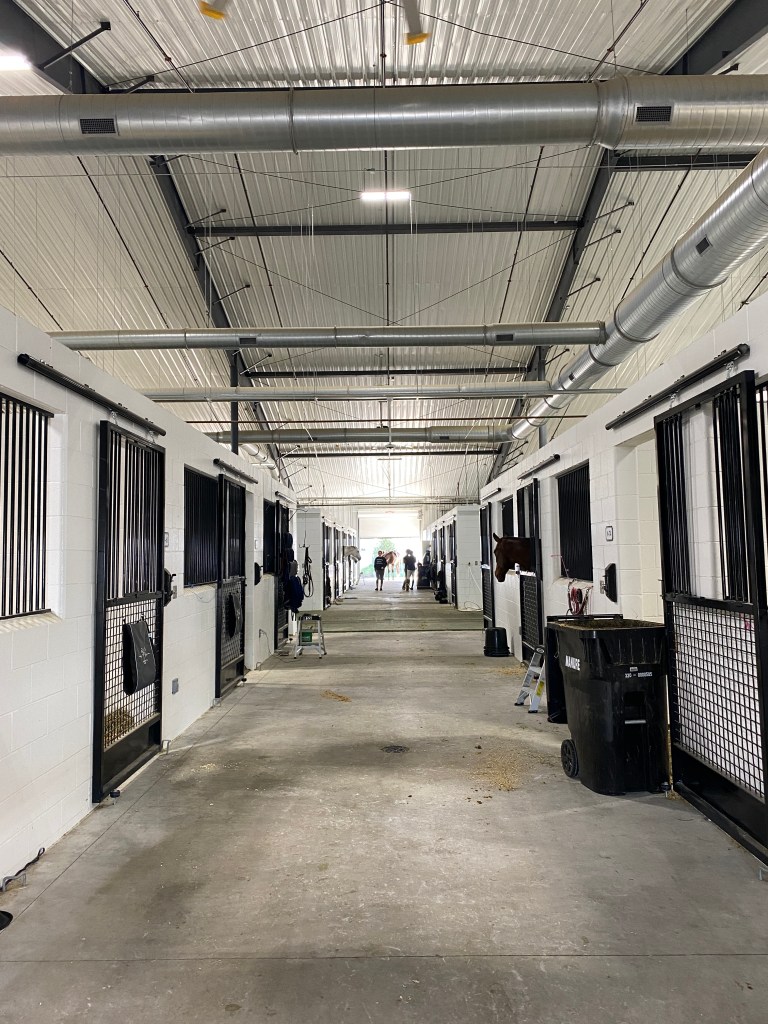
Billed as the largest equestrian complex in the United States, the over 300-acre facility has 22 outdoor arenas, four climate-controlled indoor arenas, and a world-class stadium, all surrounded by barns with over 2000 stalls, a hotel, an RV resort, and more to features to come. 

We walked the barns, checked out the RV resort for a future stay, and watched several jumping competitions in various arenas. We then returned on Saturday evening to see the $75,000 Grand Prix, a show jumping competition with the world’s top horses and riders. This was Olympic-level competition and beyond impressive.

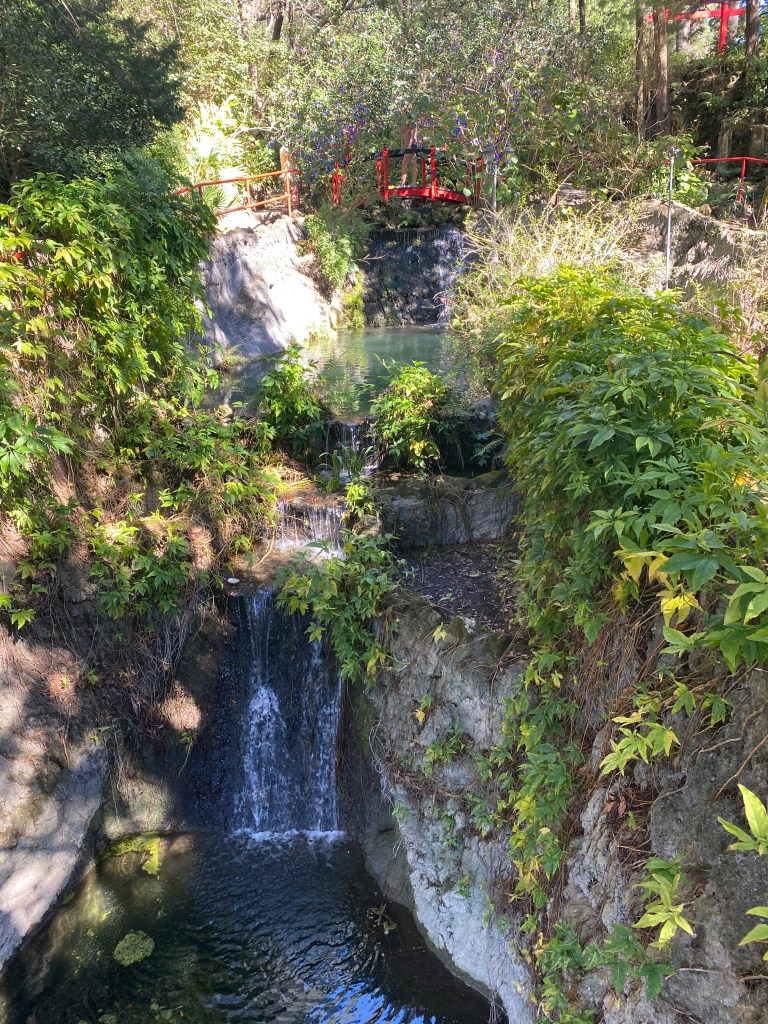
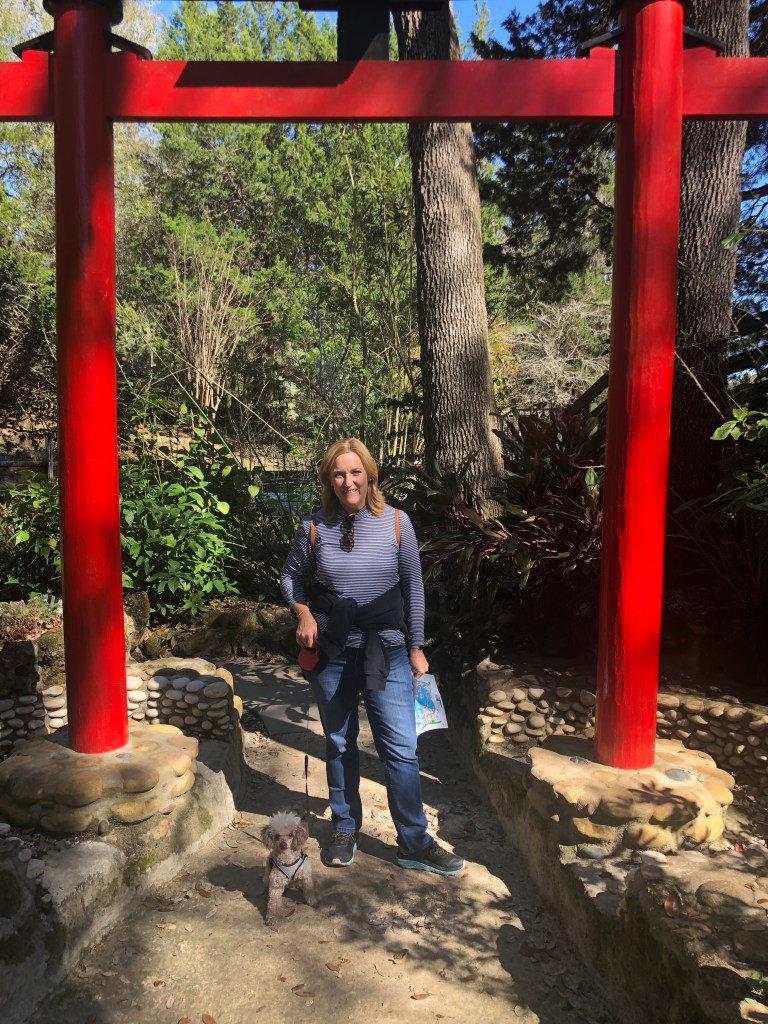
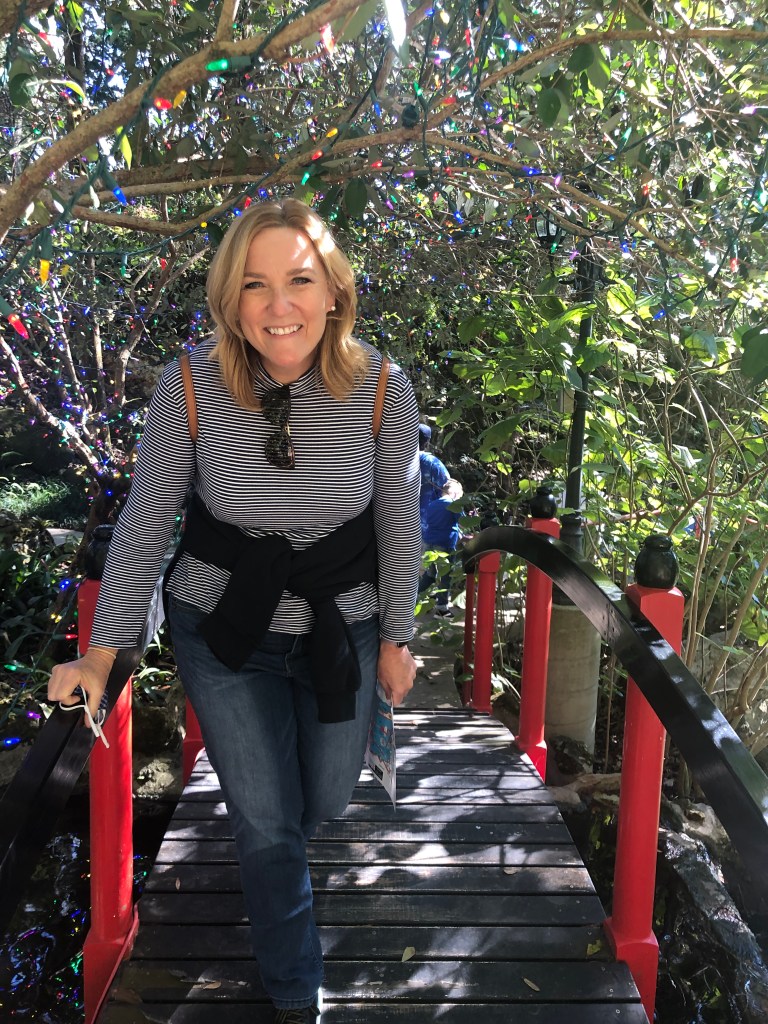
Also while in Williston we checked out the Cedar Lake Woods and Gardens, a botanical garden set in a 110 year old abandoned lime quarry. Dr. Raymond Webber purchased the property for his own private use, initially intending to use the quarry as a fishing pond.  

He dug out what was left behind, including old mining remnants, and began to transform the old, polluted, swampy quarry. Now, almost 30 years later it is a multi-level botanical garden with three waterfalls, gazebos, and lots of koi fish.

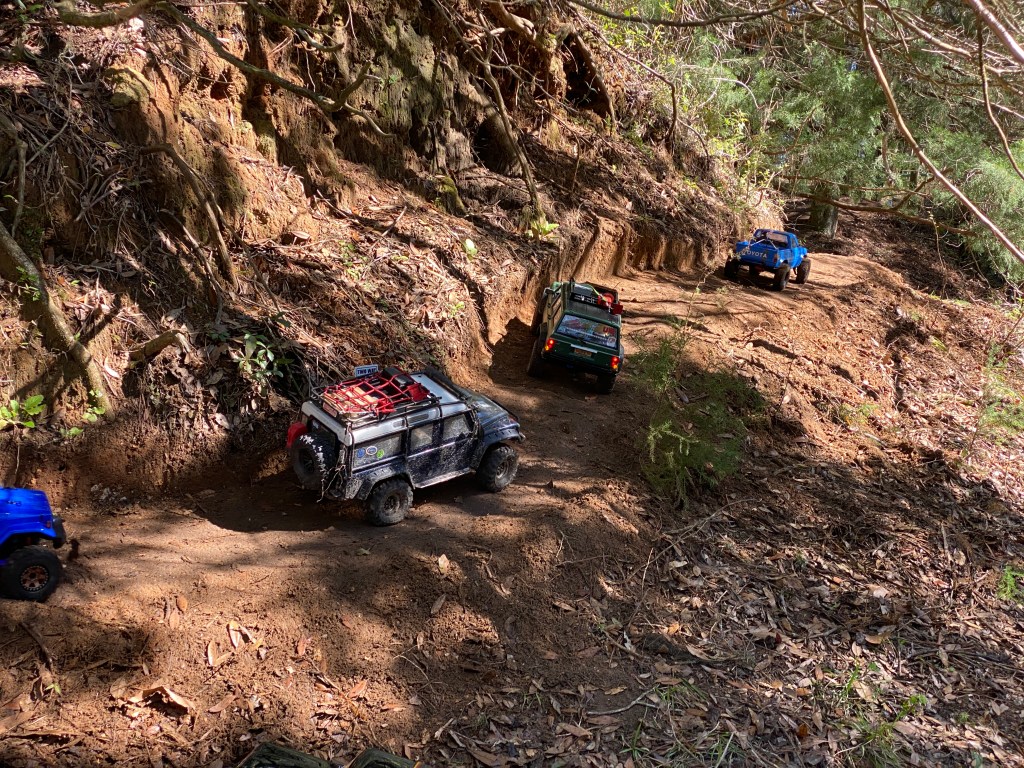
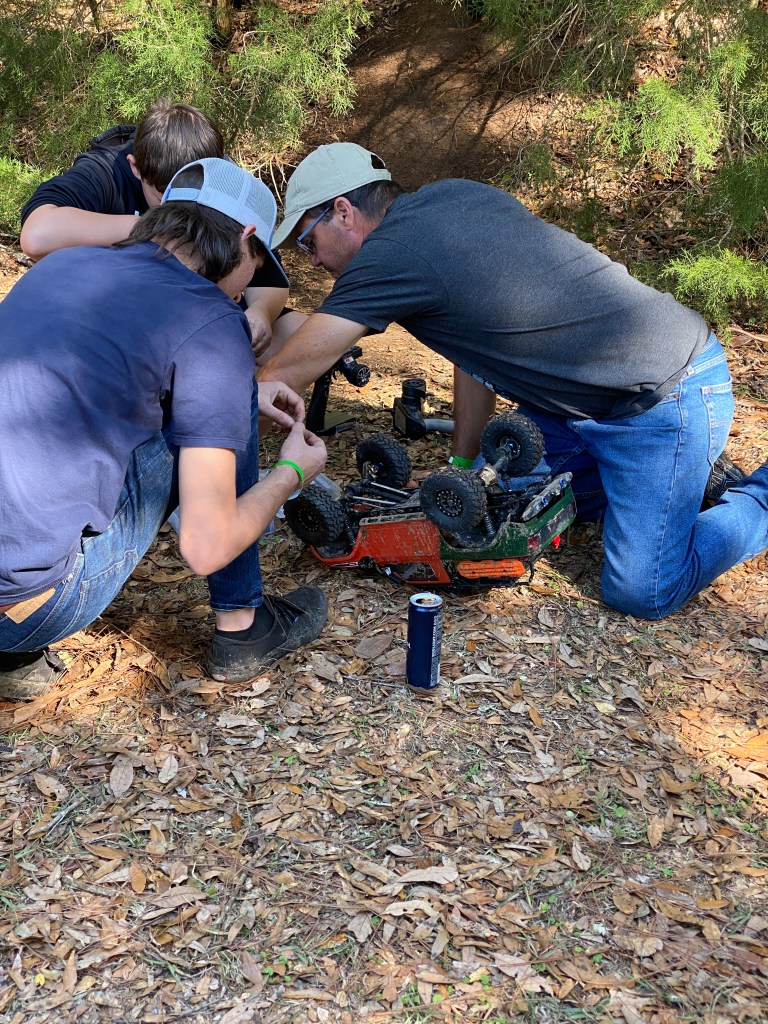
We visited Cedar Lake at the same time they were hosting a large radio-controlled truck “rally.” Having never seen anything like this, it was just as fascinating as the gardens. Ten custom courses had been carved into the woods, and “drivers” guided their custom trucks through natural obstacles like roots, rocks, and embankments.

We also walked through their expo where vendors were selling components, parts, and accessories for every kind of radio-controlled vehicle you could imagine. We particularly liked the radio-controlled Winnebago motorhome, which Steve said looked like one his brother Brian had back in the day. Only you had to push Brian’s Winnebago!

Despite some wet weather, we enjoyed our time in the north central part of Florida and will likely return, but probably a bit later in the season next time.