South Georgia Island

What do half a million penguins look like?

After a rough two days at sea crossing the Southern Ocean we made landfall at South Georgia Island. South Georgia was the center of the Antarctic whaling industry in the early 1900s and is best known as the location of Sir Ernest Shackleton’s landing at the end of the Endurance expedition (more on that later).

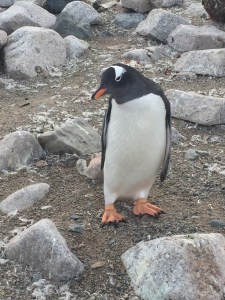
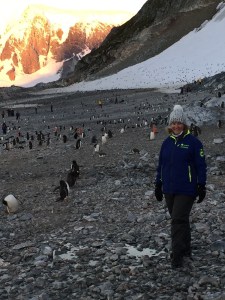
Today our destination was St. Andrews Bay and it was spectacular! Amidst a snowstorm that at times created white out conditions, we met the over half million king penguins who make this bay their home. King penguins are the second largest penguin species on Earth, with the Emperors being the largest. St. Andrews Bay is home to one of the largest King penguin colonies anywhere and to see all those creatures span across the snowy landscape was unbelievable! Once we got on to land and started to walk among them, we found them to be friendly and curious.

1.1489319612.happy-pair-of-king

King penguins

Each grown King penguin is 2 ½ to 3 feet tall and the average weight is around 30 pounds. So, imagine a half million toddlers waddling around and squawking all at once.

Among the King penguins were many fur seals and their pups. The pups reminded us of our dogs, Mia and Nica as they were playful with each other and ornery at times. Some of the young seals tried to test their strength by charging toward us but the ship’s crew were right there showing us how to make ourselves look bigger and the seals seemed to back away.

On March 5, 2017 we visited two sites on South Georgia Island. Our first stop was Grytviken, South Georgia’s first and longest running whaling station. It operated from 1904 to 1965. At its peak in the 1937-38 season, South Georgia’s deep sea whaling operation killed over 46,000 whales, almost 90 percent of the world’s catch for that year. At that time South Georgia had over 2000 inhabitants. Today there are only three permanent residents who are government officers and in the summer there is a staff at the South Georgia Museum, which we visited.

Grytviken is a fascinating place, for the whaling history as well as for the role it played in the Shackleton expeditions. Sir Ernest Shackleton led the Imperial Trans-Antarctic Expedition in 1916. After the expedition’s ship, the Endurance, was crushed by ice and sank far to the south, the men made a treacherous journey over the sea ice and across the ocean to finally reach land on Elephant Island, Antarctica. A smaller contingent of the crew then set sail for South Georgia by small boat to seek help. The journey across the Southern Ocean took 15 days until they landed on the west side of South Georgia, only to have to hike across the icy, mountainous, glaciated island to reach the whaling station at Stromness (our afternoon landing location).

While in Grytviken we visited Shackleton’s grave in the Whaler’s Cemetery and saw remnants of the expedition, as well as artifacts from the whaling era in the South Georgia Museum. While at the small church I rang the bell for Mom.

1.1489319612.shackleton-s-grave

Saluting Sir Ernest Shackleton

Our second landing today was at the old whaling station Stromness. The relics of the old operation are still standing, albeit rusting and off limits due to asbestos. Fur seals have overtaken the area and were the main attraction at this stop. We saw fur seals nursing, an albino pup, and one very large Elephant seal on the beach.

Steve took the longer hike, through an on and off again snowstorm to the waterfall Shackleton crossed during his heroic landing on South Georgia. Winter is definitely knocking on South Georgia’s door. We were lucky enough to be here for the first big snow of the season. Our ship-supplied expedition jackets and muck boots kept us warm though, and it was a great visit.

After South Georgia we had a two-day sail to our next stop: The Falkland Islands.

This slideshow requires JavaScript.

Antarctica – The White Continent

We left Ushuaia, Argentina at 6pm on Friday evening aboard the MS Fram and navigated the Beagle Channel and out into open waters within a few hours. Our two-day passage across the infamously rough Drake Passage was relatively uneventful. We saw some large swells but neither of us suffered from the seasickness that other passengers felt. We spent the time exploring the ship, using the gym, and preparing for our first landing in Antarctica.

We set foot on mainland Antarctica in our very first Antarctic landing at Neko Harbour on Monday, February 27, 2017 . With an early 7AM start, we were amidst hundreds of Gentoo penguins as the sun rose over the snow covered mountains. Our 90 minutes on land allowed us to see the penguins up close and personal under great weather conditions.

1.1487886646.our-first-penguin----a-gentoo

Gentoo penguin

We’ve been told numerous times that this is an expedition, which means we must be flexible and let nature dictate where we go. So, after returning to the ship we sailed toward the Lemaire Channel, which is supposed to have spectacular scenery. On the way the ship’s crew learned that the channel was blocked with ice so we went a different route. On the way, snow started falling and the visibility shrank to almost nothing.

Soon we arrived to Doumer Island, where we went ashore in a snowstorm to find thousands of Gentoo penguins and an abandoned research station. Even though it was snowing, we were warm in our gear and enjoyed a long walk around the island. Our highlight at this stop occurred when we were boarding the boat to return to the ship. Less than a few yards from our small boat, a penguin flew out of the water followed by a fast moving leopard seal in pursuit. Leopard seals are considered top predators of penguins, and they have attacked humans on several occasions. To see one up close and in pursuit was certainly a thrill! We were up close witnessing the food chain with its life and death consequences. This time, the penguin survived. Unfortunately it happened so fast we didn’t get a photo.

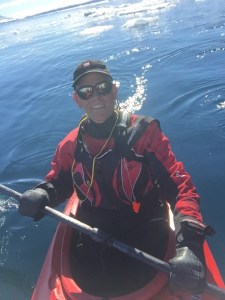
On our second day in Antarctica, Tuesday, February 28, 2017, we joined 10 other shipmates on a guided kayak tour of Paradise Harbour. After being fitted with a dry suit, we were taken by Polar Circkel boat to a calm beach where we got in our kayaks and began our adventure. We have our own two-person kayak at home and have quite a bit of experience paddling. Still, we’d never kayaked through and around large chunks of ice, some of which had Crabeater seals lounging on top.

1.1487886646.the-paddler

Kayaking in Paradise Bay

Getting up close to the icebergs allowed us to see the depth to which these large bergs extend under the water. After about an hour and a half of peacefully gliding through the beautiful bay, we turned back towards the shore and boom!!! The winds picked up, the waves grew, and boy was it a rough paddle back! At one point the tender boats came out to rescue members of our group but we were able to make it back to shore safely. It was cold, wet, and uncomfortable, but Steve did a great job of keeping us moving forward and we survived!

In the afternoon we sailed through a beautiful strait, seeing seals, penguins, and whales along the way. We reached our afternoon landing area, Cuverville Island at about 4:30 p.m. and waiting our turn to go ashore. On the ship we are broken into 8 groups of about 35 people each. When your group number is called you go to deck two, get your muck boots and life preserver, and board one of the Polar Circkel boats to the landing spot. Sometimes the landing is on to rocks and other times it is onto a rocky beach. At Cuverville it was an easy landing on a beach, where we were met by one of the largest gatherings of Gentoo penguins in Antarctica.

1.1487886646.one-of-the-last-to-leave-cuverville

One of the last humans on Cuverville Island

Because it was late in the day, we enjoyed a beautiful “sunset” and were some of the last people on the island before we had to go back abroad the ship.

On our final day in Antarctica we visited Deception Island. This was a cold and windy stop, but really interesting. After a start and stop as to whether we were going to be able to enter the collapsed caldera, the winds died down enough for us to enter the narrow channel named Neptune’s Bellows. Once inside the bay we visited the historic Whaler’s Bay. Once a Norwegian whaling station, which operated between 1912 and 1931, the site became a British base in 1941 as part of a secret WWII operation. In 1969 the then research site was destroyed by a mudslide triggered by a volcanic eruption in the active volcano. The volcano is still active and monitored consistently.

We walked the length of the beach up to Neptune’s Window, a windy overlook to the sea. Along the way we had to be careful not to disturb the many fur seals that were making the beach home. The original plan was to use this beach as the site of the “polar plunge,” and Steve was prepared to go swimming. Unfortunately the number of fur seals in the area prevented us from taking that challenge.

Next stop: South Georgia Island, a two day sail across the Scotia Sea

This slideshow requires JavaScript.

El Fin del Mundo

“El Fin del Mundo,” the end of the world! That’s where we’ve been this week! Ushuaia is the southernmost city in the world, or so Argentina says. Chile has a small outpost that is a little further south, but that does’t really seem to count! Ushuaia is also the jumping off point for Antarctic expeditions and is home to the magnificent Tierra del Fuego National Park.

The city is set at the base of majestic snow-covered mountains facing the famed Beagle Channel, where explorers have sailed for centuries. Despite the remote location, the city has numerous great restaurants, museums, and of course active adventures.

On our first full day in Ushuaia we took the bus to Tierra del Fuego National Park. The park is full of well-marked trails along the coast and in the mountains. Because it began as a cloudy day we took the coastal trail and it was spectacular. Along the way we had great views of the channel and the bay and even ran across several colorful, chatty Magellanic Woodpeckers who were very happy to put on a show for us. The 5+ mile hike was a perfect way to spend the afternoon and it was going perfect until…

1.1487498868.two-magellenic-woodpeckers

Magellanic Woodpeckers

The trail includes a number of footbridges to take you safely across muddy or boggy areas. With only about a half a kilometer to go, Marnie stepped off one of the bridges the wrong way and ate it big time! The resulting sprained ankle curtailed the activity for much of the remainder of the week, which was tough because this place is so beautiful. Luckily the owners of our B&B, Guillermo and Maria Cristina were more than helpful with ice, a wrap, and pain relievers.

1.1487498868.it-s-just-a-sprain

Ouch!

Since we were looking for low impact activities we signed up for an eight hour Beagle Channel boat tour. At first eight hours sounded like a very long day on a boat, but we were pleasantly surprised by the outcome. First we boarded a comfortable catamaran and travelled east on the channel past islands covered with cormorants and sea lions. The Faro de Les Eclaireurs (Ushuaia lighthouse) is a highlight of the tour, marking the entrance into the city’s large bay. Another highlight of the cruise is a lengthy stop on the shores of Isla Martillo, which is home to a large colony of Magellanic and Gentoo penguins. Our first penguin encounter!!! It was fun to watch the birds swim, surf, and waddle just like we’ve seen on countless National Geographic documentaries. Now we’re even more excited to get to Antarctica to see even more species of these cute little guys.

1.1487498868.old-washing-machine-at-harberton

Harberton relics

After a few hours of touring by water we landed at the Harberton Estancia. Harberton is the oldest estancia (farm) in Tierra del Fuego founded in the late 1880s and is managed by the great-grandson of the founder. Originally operating with sheep for wool and cattle for meat, the estancia is now open for tourism during the summer season. We had a personalized tour of the property which included the boat house, the sheering barn, and the family cemetery. After touring the property we visited the on-site marine mammal and bird museum and laboratory which studies the basic biology of the mammals and birds of the southern tip of South America. The museum is the result of over 34 years of scientific research by its founder, Natalie Goodall, the late wife of Harberton’s manager, the founder’s great-grandson. The museum’s collection contains skeletons of over 2700 marine mammals (mainly dolphins) and 2300 birds.

Our full day was capped off with a comfortable one hour drive back to Ushuaia with stops to view some of the many beaver dams along the way, as well as the area’s beautiful lakes. Considering Marnie’s limited mobility, it was a very full and fun day!

The rest of our week in Ushuaia was been spent preparing for our expedition to Antarctica, which begins on Friday. Steve’s gotten in some long runs, got a haircut, and shaved! Marnie has been tending to her swollen ankle. Each day we take a walk around town and we’ve enjoyed some good meals of local seafood and lamb.

1.1487498868.fun-in-ushuaia

Ushuaia fun

On our final full day in Ushuaia we moved from our simple Bed and Breakfast to the “five star” Las Hayas Resort. The hotel is not quite what we would expect from a five star resort, but it’s where we begin our Antarctic adventure. Our exact cruise itinerary on the MS Fram is weather-dependent but looks roughly like this:

Feb 24 Ushuaia, Argentina
Feb 25-26 Drake Passage
Feb 27- Mar 1 Antarctica
Mar 2-3 At Sea
Mar 4-5 South Georgia
Mar 6-7 At Sea
Mar 8-10 Falkland Islands
Mar 11-13 Drake Passage
Mar 14 Montevideo, Uruguay

It will probably be a few weeks before we post another update as we won’t have Internet while on the ship to Antarctica. You can count on several postings about that big adventure as soon as we are back online in mid-March. Stay tuned!!!


This slideshow requires JavaScript.